
What to Include in a Coffee Catering RFP for Conferences and Trade Shows
/
Coffee catering can be a valuable part of a conference or trade show, whether you're welcoming attendees, supporting a sponsor activation, or giving visitors another reason to stop at your exhibitor booth.
The challenge is that coffee catering proposals can vary significantly. One vendor may quote basic brewed coffee, while another includes a professionally staffed espresso bar, specialty beverages, equipment, and a detailed service plan. Comparing the totals without comparing the actual services can lead to an expensive mismatch.
A well-written request for proposal (RFP) helps you establish what you need, evaluate vendors on equal terms, and resolve logistical questions before event day.
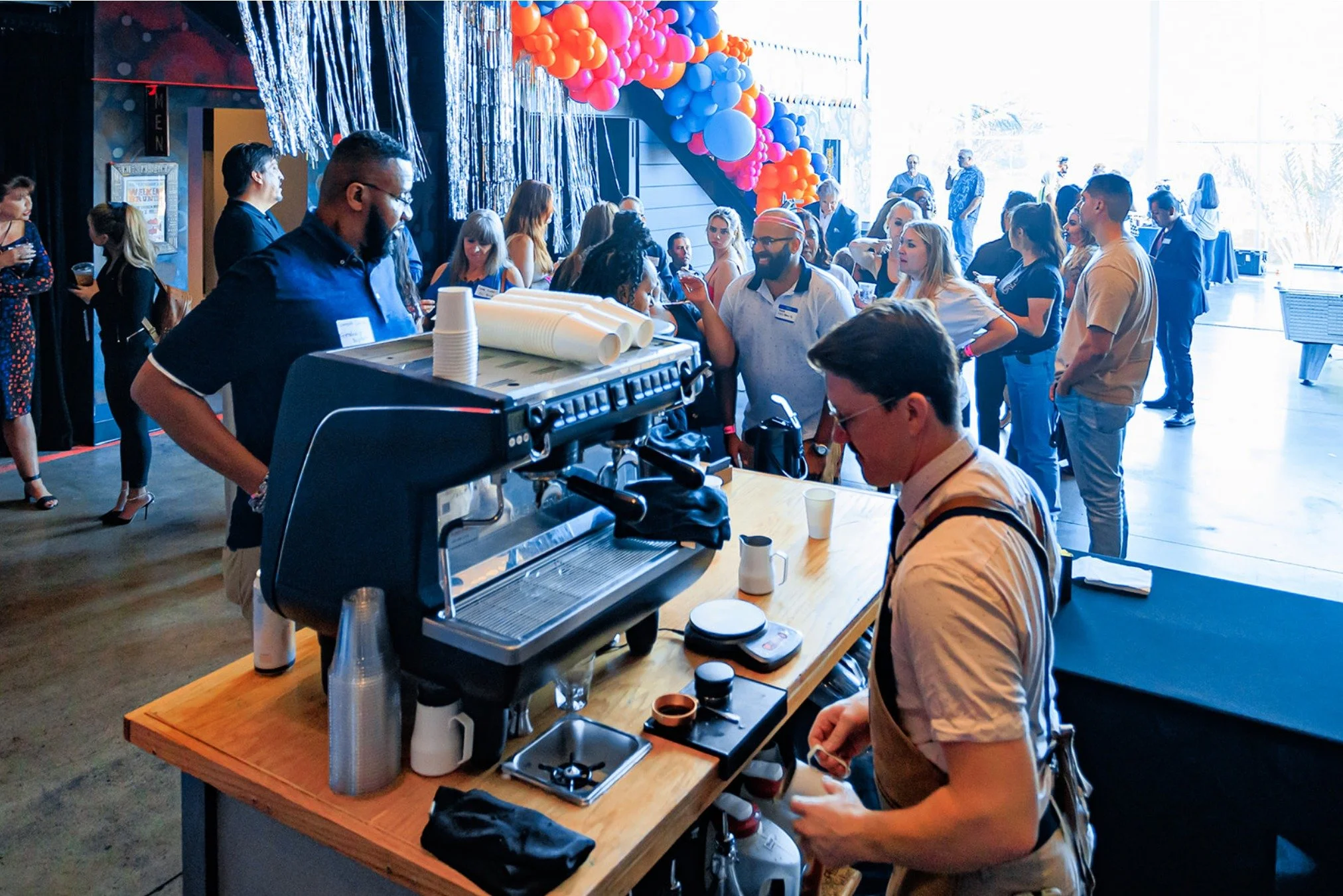
Rugged Coffee LLC provides professionally staffed mobile espresso bars for conferences, conventions, trade shows, exhibitor booths, and corporate events throughout Southern California and Las Vegas. Drawing on our experience serving convention audiences, this guide explains what to include in a coffee catering RFP and provides a reusable template for your next event.
Do you need an RFP or just a quote?
Not every event requires a formal RFP.
A quote request is usually sufficient when you have a defined event, a straightforward service requirement, and only a few details to confirm.
An RFP is more useful when you're comparing several vendors, organizing a large or multi-day event, coordinating with a convention venue, or purchasing coffee catering as part of a sponsor or exhibitor activation. It establishes common requirements so each vendor responds to the same brief.
For larger events, the extra planning can help your team compare more than price. It creates a consistent way to evaluate beverage quality, service capacity, staffing, logistics, and contractual terms.
1. Define the event and its objectives
Give every prospective vendor the same basic event information.
Include:
Event name and venue: Identify the conference, convention center, hotel, or trade show.
Dates and schedule: Include each service date and the requested service hours.
Service location: Specify the booth number, sponsor activation, networking lounge, VIP area, or other location.
Expected attendance: Provide total event attendance and your estimate of the audience likely to access the coffee station.
Service duration: State the number of hours required each day.
Event objectives: Explain whether the priority is attendee hospitality, exhibitor engagement, sponsor visibility, networking, or employee appreciation.
Budget: Share a target range if one has been established.
Decision timeline: State the proposal deadline and anticipated booking date.
Total convention attendance is not the same as expected demand at an individual coffee station. A convention may attract thousands of people, but the number who visit a specific booth depends on its location, audience, programming, and other factors.
Give vendors your best estimate of the station's likely audience rather than asking them to plan solely around the convention's headline attendance.
For service options designed around convention and trade show environments, explore Rugged Coffee LLC's conference and convention coffee catering.
2. Explain the expected demand
Two events with the same expected guest count can create very different workloads.
For example, serving 300 guests over four hours is a different operational challenge from serving 300 guests during a short break between conference sessions.
Include the information that helps vendors understand the likely demand:
Estimated number of people who will access the station.
Expected peak periods, including keynote arrivals and scheduled breaks.
Whether service will run continuously or during specific time windows.
Whether guests are likely to arrive gradually or in concentrated groups.
Whether multiple stations or service locations are being considered.
Whether the same audience will have access to the station across multiple days.
Ask vendors to explain how their proposed staffing, equipment, and service workflow fit these conditions.
If a vendor quotes a service-capacity estimate, ask what assumptions support it. Beverage complexity, the proportion of hot versus iced drinks, staffing, and the equipment configuration can all affect throughput.
For exhibitor booths, also consider where guests will queue, order, and collect beverages. The station should complement the booth experience rather than obstruct demonstrations or conversations.
3. Define the guest experience and beverage menu
The term coffee catering does not guarantee a particular menu or service style. Your RFP should describe the experience you want guests to receive.
Specify whether you want:
Espresso, lattes, cappuccinos, and Americanos.
Hot brewed coffee.
Iced espresso beverages or cold brew.
Signature flavored lattes.
Non-coffee options such as tea or matcha.
Alternative milk options.
Event-inspired specialty beverages or branded menu elements, where available.
Then clarify the service model.
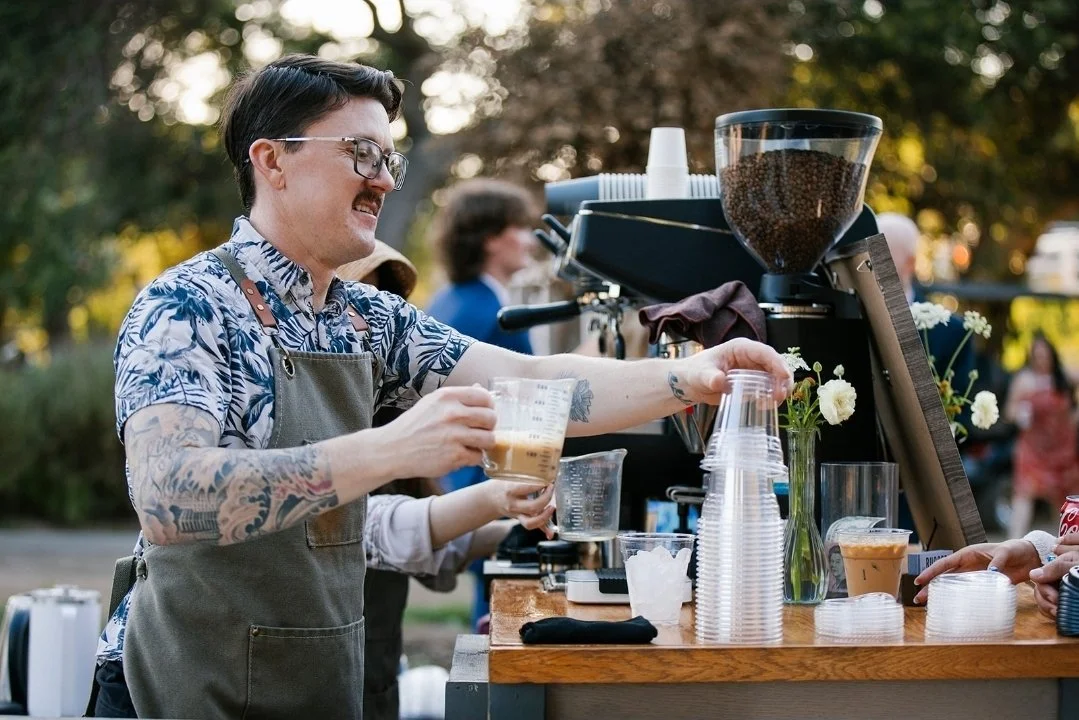
Will professional baristas prepare drinks individually? Can guests customize beverages within the agreed menu? Who supplies cups, lids, napkins, milk, sweeteners, and other service essentials? Does the proposed package include every requested drink, or are some options upgrades?
If you're requesting unlimited service, define exactly what that means in the contract, including the eligible audience, menu, service hours, and any applicable restrictions.
A clear specification prevents a low initial quote from appearing more attractive simply because it excludes items another vendor has already included.
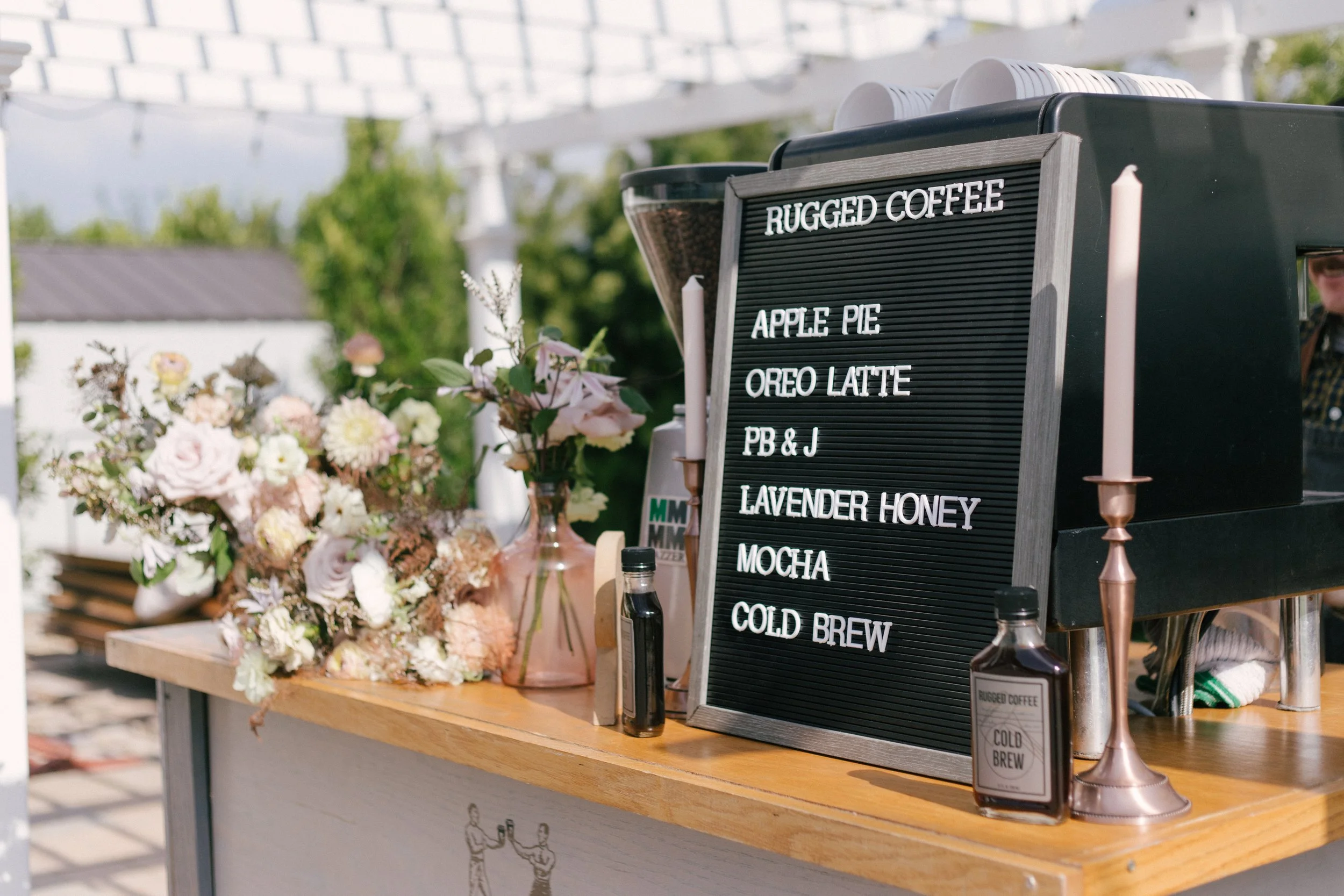
Review the Rugged Coffee LLC event menu for an example of how a specialty beverage menu can be presented.
4. Confirm venue and operational requirements
Before signing a contract, establish whether the proposed service can operate within the venue's rules and physical constraints.
Ask the vendor to provide its actual requirements for:
Electrical supply, including circuit count and amperage.
Equipment footprint and working space.
Load-in access, loading docks, elevators, and transport distance.
Setup and breakdown windows.
Water, drainage, refrigeration, or other needs specific to the equipment.
Insurance, vendor credentials, permits, and venue approvals.
Waste disposal and cleanup.
Parking arrangements.
Do not assume that all mobile espresso bars have identical equipment requirements.
For example, Rugged Coffee LLC's standard espresso setup requires two dedicated 20-amp circuits, with a separate circuit for each coffee cart. Your selected vendor may have different requirements, so confirm the specifications for the actual setup being proposed.
Share those requirements with the venue's operations team before finalizing the service location.
For additional planning guidance, see What Does a Mobile Espresso Bar Need at a Corporate Event?.
5. Request a written staffing and contingency plan
Ask each vendor to identify the number of staff included and explain how the team will manage the proposed service.
The response should cover:
Number of baristas and any supervisory staff.
Staffing rationale for the expected demand.
Preparation and replenishment procedures.
Service-area cleanliness.
Event-day contact and communication.
Backup arrangements for staff or equipment problems.
Setup and breakdown responsibilities.
The purpose is not to require every vendor to use the same staffing model. It is to understand why each proposed model is appropriate and what happens if the plan encounters a problem.
6. Require itemized pricing and clear contract terms
Ask each vendor to price the same service scope, schedule, menu, and attendance assumptions.
Pricing itemWhat to requestBase packageIncluded services, menu, and service durationAdditional hoursHourly rate and applicable minimumsAdditional staff or stationsCost and conditions requiring themMenu upgradesCharges for specialty beverages or additional ingredientsTravel and parkingTravel fees, parking costs, and related chargesSetup and breakdownWhether both are includedTaxes and feesApplicable taxes and any additional chargesPayment termsReservation payment and balance due dateCancellationCancellation, refund, and rescheduling termsChangesRules for changes to attendance, menu, schedule, or venueQuote validityDate through which the proposal remains valid
The lowest total is not automatically the best value. A quote may exclude additional hours, menu options, staffing, or logistical requirements that another proposal includes.
Compare the full cost of delivering the service you actually need.
For an example of a professionally staffed beverage hospitality offering, review Rugged Coffee LLC's catering packages.
7. Evaluate relevant experience and first-hand evidence
Request examples of events comparable to yours. Relevant experience may include conventions, trade shows, sponsor activations, corporate hospitality, or other high-traffic service environments.
Ask for event photos, references where available, and an explanation of the vendor's role. A portfolio should help you evaluate the actual service, not simply the appearance of a coffee cart.
What our convention experience has taught us
Rugged Coffee LLC's convention engagements include the Hitachi Energy booth, BIO International Convention in 2024 and 2026, and the 2026 ASA Annual Convention.
Across these engagements, we observed our coffee station becoming one of the busiest areas on the showroom floor. We also received enthusiastic feedback from attendees who told us our coffee was the best they had tasted at the event.
At BIO 2026, one piece of feedback shared with our team was:
“Nonstop people kept telling us that we had the best coffee they have ever had.”
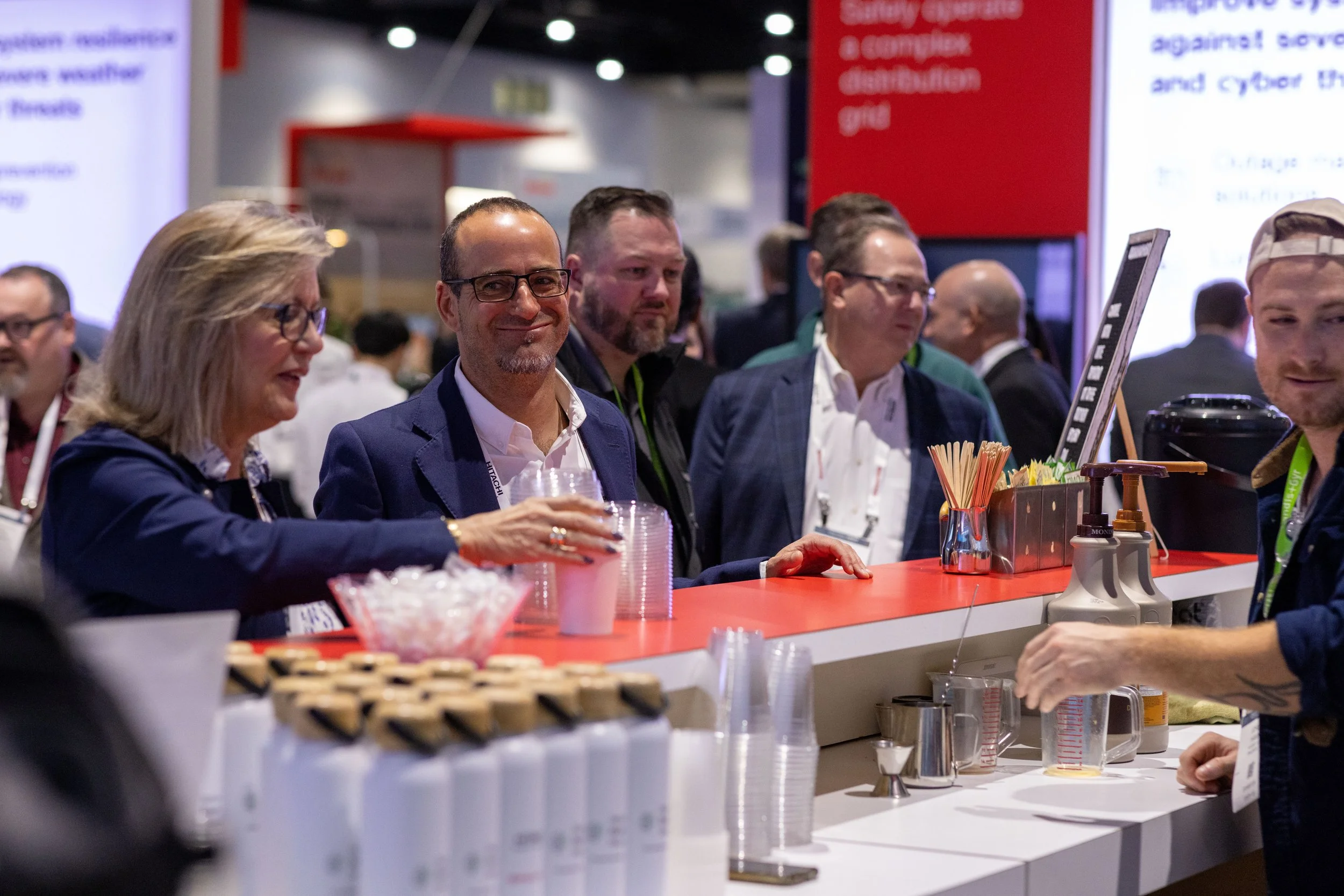
These are our observations and the feedback we received, not the results of a formal attendee survey or independently measured traffic comparison. They illustrate why beverage quality and guest experience deserve consideration alongside price, staffing, and logistics.
[Insert authentic Rugged Coffee LLC convention photo here.]
Suggested image alt text: Rugged Coffee LLC's mobile espresso bar serving attendees at a convention.
For another perspective on coffee as part of an exhibitor's guest experience, read The Secret to Standing Out at Conventions: Beverage Catering That Activates Your Booth.
8. Use this RFP template to compare vendors
The following template is designed to be copied into a document or spreadsheet. Complete the event brief once, distribute the same requirements to each vendor, and use the comparison worksheet to evaluate their responses.
Part A: Event brief
Event details
Event name: __________________________________
Venue and city: __________________________________
Event dates: __________________________________
Service location or booth number: __________________________________
Total expected event attendance: __________________________________
Estimated station-access audience: __________________________________
Requested service hours per day: __________________________________
Number of service days: __________________________________
Target budget: __________________________________
Proposal deadline: __________________________________
Anticipated decision date: __________________________________
Event-day contact: __________________________________
Primary objective
Attendee hospitality
Exhibitor booth engagement
Sponsor activation
Networking lounge
VIP or executive hospitality
Employee appreciation
Other: __________________________________
Demand and service requirements
Anticipated peak periods: __________________________________
Expected demand during peak periods: __________________________________
Continuous service or scheduled breaks: __________________________________
One station or multiple stations: __________________________________
Required beverage categories: __________________________________
Branding or customization requirements: __________________________________
Other service considerations: __________________________________
Part B: Required vendor response
Ask each vendor to include the following in its proposal.
Service proposal
Recommended service model and explanation.
Beverage menu and included customizations.
Number of stations and staff.
Estimated service capacity and the assumptions behind it.
Plan for peak periods and replenishment.
Operations
Equipment footprint and electrical specifications.
Load-in, setup, and breakdown schedule.
Venue approvals, insurance, and credential requirements.
Parking, waste management, and cleanup arrangements.
Event-day contact and contingency plan.
Commercial terms
Itemized total price.
Included hours and additional-hour rates.
Additional station or staffing charges.
Travel, parking, taxes, and other fees.
Reservation payment, remaining balance, and deadlines.
Cancellation, refund, and change policies.
Proposal expiration date.
Relevant experience
Comparable event examples.
References or testimonials, where available.
Authentic event photos.
Explanation of how the proposed plan fits this event.
Part C: Mandatory pass/fail checks
Complete this section before assigning weighted scores. A vendor should not advance simply because it scores well on price or presentation if it cannot meet a critical requirement.
Non-negotiable requirementVendor AVendor BVendor CAvailable for the requested date and hoursPass / FailPass / FailPass / FailMeets venue insurance and credential requirementsPass / Fail / PendingPass / Fail / PendingPass / Fail / PendingElectrical and equipment setup is compatiblePass / Fail / PendingPass / Fail / PendingPass / Fail / PendingFootprint and placement are venue-approvedPass / Fail / PendingPass / Fail / PendingPass / Fail / PendingMeets required service scope and menuPass / FailPass / FailPass / FailAccepts essential contract and venue conditionsPass / FailPass / FailPass / Fail
Decision rule: Resolve every pending item before signing. A failed non-negotiable requirement should disqualify a proposal unless the issue can be resolved and documented before the booking is finalized.
Adjust the requirements to your event. Do not treat a requirement as mandatory unless it genuinely is one.
Part D: Three-vendor weighted scorecard
Once the vendors have passed the mandatory checks, score each category from 1 to 5.
1: Poor or unsupported.
2: Significant gaps.
3: Meets the requirement.
4: Strong response with good supporting detail.
5: Excellent response with convincing supporting evidence.
Evaluation categoryWeightVendor AVendor BVendor CRelevant event experience15%_________Service plan and peak-demand readiness20%_________Beverage quality and menu fit15%_________Staffing and reliability15%_________Venue logistics and operational readiness15%_________Pricing clarity and overall value15%_________Communication and planning process5%_________Weighted total out of 100100%_________Total quoted price$___$___$___
How to calculate the weighted score: Divide each category's rating by 5, multiply it by that category's weight, and add the results. For example, a rating of 4 out of 5 in a category weighted at 20% contributes 16 points toward the total score.
Final decision notes
Vendor selected: __________________________________
Main reasons for selection: __________________________________
Outstanding items to resolve: __________________________________
Final agreed price: __________________________________
Contract approval date: __________________________________
The scorecard supports your decision, but it should not make the decision automatically. If two vendors have similar scores, consider which proposal offers the strongest evidence, clearest communication, and best fit for the event's priorities.
9. Common RFP mistakes to avoid
Using total convention attendance as the only demand estimate. Give vendors your best estimate of the audience likely to access the station and the timing of peak periods.
Comparing different service scopes. Standardize hours, menu requirements, attendance assumptions, and other key details before comparing prices.
Leaving unlimited service undefined. Document the included menu, eligible audience, contracted service window, and any restrictions.
Skipping venue approval. Confirm electrical supply, space, access, insurance, parking, and vendor requirements before finalizing the arrangement.
Choosing on price alone. Use the pass/fail checks first, then compare the quality and completeness of each qualifying proposal.
Waiting until the last minute. Early coordination gives the vendor and venue more time to confirm availability, access, equipment, and operational details.
Frequently asked questions
What should a coffee catering RFP include?
A coffee catering RFP should include event details, expected station demand, service hours, beverage requirements, venue logistics, staffing expectations, itemized pricing, contract terms, and relevant vendor experience. A standardized brief helps you compare proposals fairly.
When should I use an RFP instead of requesting a quote?
Use a simple quote request for a straightforward event with clearly defined requirements. A formal RFP is more useful when comparing multiple vendors, coordinating a large or multi-day event, or evaluating service plans with several operational requirements.
How do I estimate coffee catering needs for a trade show booth?
Estimate the number of people likely to visit the booth, the service hours, and the expected concentration of visitors during peak periods. Share these estimates with prospective vendors and ask them to explain the staffing, equipment, and workflow they recommend.
What venue requirements should I confirm before booking?
Confirm electrical capacity, the equipment footprint, load-in access, setup and breakdown windows, parking, insurance, vendor credentials, and any applicable venue approvals. Ask the selected vendor for its actual equipment specifications and have the venue confirm compatibility.
Is the cheapest coffee catering proposal the best choice?
Not necessarily. First verify that the vendor meets all essential requirements. Then compare the full service, beverage quality, staffing, expected capacity, logistics, contract terms, and total cost.
What is the difference between exhibitor booth coffee catering and conference-wide coffee service?
Exhibitor booth service usually focuses on a defined audience and may support brand engagement or sponsor hospitality. Conference-wide service may involve a broader audience, multiple locations, and coordinated service periods. The RFP should clearly identify the audience and service location.
Where can I request conference coffee catering?
Rugged Coffee LLC provides professionally staffed mobile espresso bars for conferences, conventions, trade shows, exhibitor booths, and corporate events throughout Southern California and Las Vegas. Submit an event inquiry to discuss your event date, venue, attendance, and service goals.
Plan your next conference coffee catering experience
A useful coffee catering RFP does more than collect prices. It establishes common requirements, identifies non-negotiable conditions, and gives your team a consistent way to compare vendors.
For conferences and trade shows, that preparation helps you choose a partner whose beverage quality, staffing, equipment, and service plan fit the event.
Rugged Coffee LLC provides professionally staffed mobile espresso bars and specialty coffee hospitality for conferences, conventions, trade shows, and corporate events throughout Southern California and Las Vegas.
Give your guests great coffee. Without giving yourself another job.
Explore conference and convention coffee catering or request a proposal.