Why is cold brew coffee so popular at conferences and trade shows?
Cold brew coffee is popular at conferences and trade shows because it is refreshing, smooth, and ideal for serving large crowds quickly. Convention attendees often spend hours walking exhibit halls and attending sessions, making cold brew an attractive beverage option that helps maintain energy without the bitterness commonly associated with traditional coffee. Cold brew is especially popular at Southern California events due to the region's warm climate.
Why Cold Brew Has Become a Convention Favorite
Is cold brew better than traditional coffee for conventions?
Cold brew is often better suited for conventions because it can be served quickly, maintains consistent quality, and appeals to a broad audience. Its smooth flavor profile and refreshing nature make it especially effective for high-volume events, trade shows, and conferences held in warmer climates such as Southern California.
Convention attendees often spend eight to twelve hours walking exhibit halls, attending breakout sessions, networking with peers, and participating in educational programming.
Traditional coffee solutions frequently struggle under these conditions because:
Coffee becomes stale
Large lines form during breaks
Temperature consistency fluctuates
Self-service stations create bottlenecks
Attendees view standard coffee as an afterthought
Cold brew solves many of these issues.
Professionally prepared cold brew offers:
These advantages are particularly important in Southern California where conventions routinely occur during warmer months and attendees often prefer refreshing beverage options over hot coffee.
As a result, searches for terms such as:
Convention coffee catering
Trade show beverage service
Corporate event coffee bar
Cold brew catering
Mobile coffee bar for conferences
Employee appreciation event catering
Conference beverage solutions
What should event planners look for in a convention coffee catering company?
Event planners should evaluate a coffee caterer's experience with convention centers, staffing capabilities, insurance compliance, service speed, equipment reliability, and beverage quality. Providers with experience serving trade shows and conferences are typically better equipped to manage high attendee volumes and complex venue requirements.
How far in advance should convention coffee catering be booked?
Convention coffee catering should ideally be booked three to six months before the event date. Large conventions, corporate conferences, and trade shows often require extensive planning, production scheduling, staffing coordination, and venue approvals. Early booking helps ensure availability and smoother event execution.
Why do sponsors choose coffee bars at conventions?
Sponsors frequently choose coffee bars because they attract consistent attendee traffic throughout the day. Branded beverage stations provide repeated exposure, encourage interaction, and create positive associations between attendees and the sponsoring company. Coffee sponsorships often generate more engagement than traditional static signage.
continue growing among event professionals seeking ways to improve attendee satisfaction.
Forecasting Demand for High-Volume Events
One of the most overlooked aspects of convention beverage service is demand forecasting.
Professional coffee caterers do not simply estimate consumption based on attendance numbers.
Instead, multiple variables must be evaluated:
Event Type
A technology conference often generates different beverage consumption patterns than a healthcare convention.
Sales conferences typically produce higher caffeine demand than educational symposiums.
Time of Day
Morning sessions generally create the highest volume spikes.
Secondary peaks often occur:
Attendee Demographics
Audience demographics influence beverage preferences.
For example:
Younger professionals often favor cold brew
Executive audiences frequently request premium espresso beverages
Health-conscious groups may seek matcha and tea options
Climate Conditions
Southern California weather significantly impacts beverage consumption.
Events in Anaheim, Los Angeles, Palm Springs, Long Beach, and San Diego frequently experience temperatures that drive stronger demand for cold beverages.
Accurate forecasting prevents two costly mistakes:
Running out of product
Over-ordering inventory
Both negatively affect event ROI.
How much coffee should be planned for a conference?
Most conference planners should estimate between 1.5 and 2 beverages per attendee during a full-day event. Factors such as weather, event length, attendee demographics, and beverage variety can significantly impact consumption. High-energy events, trade shows, and employee appreciation events often experience greater beverage demand than standard meetings.
Production Planning Before the Convention
Cold brew cannot simply be made on-site moments before service.
Premium cold brew requires extensive preparation.
Most specialty coffee providers begin production several days before an event.
The process often includes:
Bean sourcing
Grinding
Extended steeping
Filtration
Quality control testing
Refrigerated storage
For large conventions serving hundreds or thousands of guests, production planning becomes a critical operation.
A single day of convention service may require dozens of gallons of cold brew.
Multi-day conferences often require significantly larger production schedules to maintain freshness and consistency throughout the event.
The goal is simple:
Deliver the same exceptional beverage experience to the first attendee of the morning and the last attendee of the afternoon.
Transportation Logistics Across Southern California
Transportation represents one of the most important elements of convention beverage operations.
Southern California presents unique logistical challenges due to:
Convention centers frequently establish strict vendor move-in requirements.
Missing a designated loading window can create significant operational issues.
Professional event coffee providers account for:
Route Planning
Travel times must consider:
Refrigerated Transport
Cold brew must remain temperature controlled.
Maintaining cold-chain integrity protects:
Flavor quality
Product freshness
Food safety compliance
Equipment Transportation
Large-scale beverage activations often require:
Kegerator systems
Refrigeration units
Coffee carts
Dispensing equipment
Ice storage
Signage
Backup supplies
Every component must arrive safely, on schedule, and ready for deployment.
Navigating Convention Center Requirements
Every convention venue operates differently.
Experienced coffee caterers understand the complexities of working within facilities such as:
San Diego Convention Center
Anaheim Convention Center
Long Beach Convention Center
Pasadena Convention Center
Ontario Convention Center
Venue requirements may include:
Insurance certificates
Vendor approvals
Electrical compliance
Food service permits
Load-in procedures
Safety regulations
Failure to meet these requirements can delay setup and negatively impact event timelines.
Successful convention beverage partners develop systems that ensure compliance before arrival.
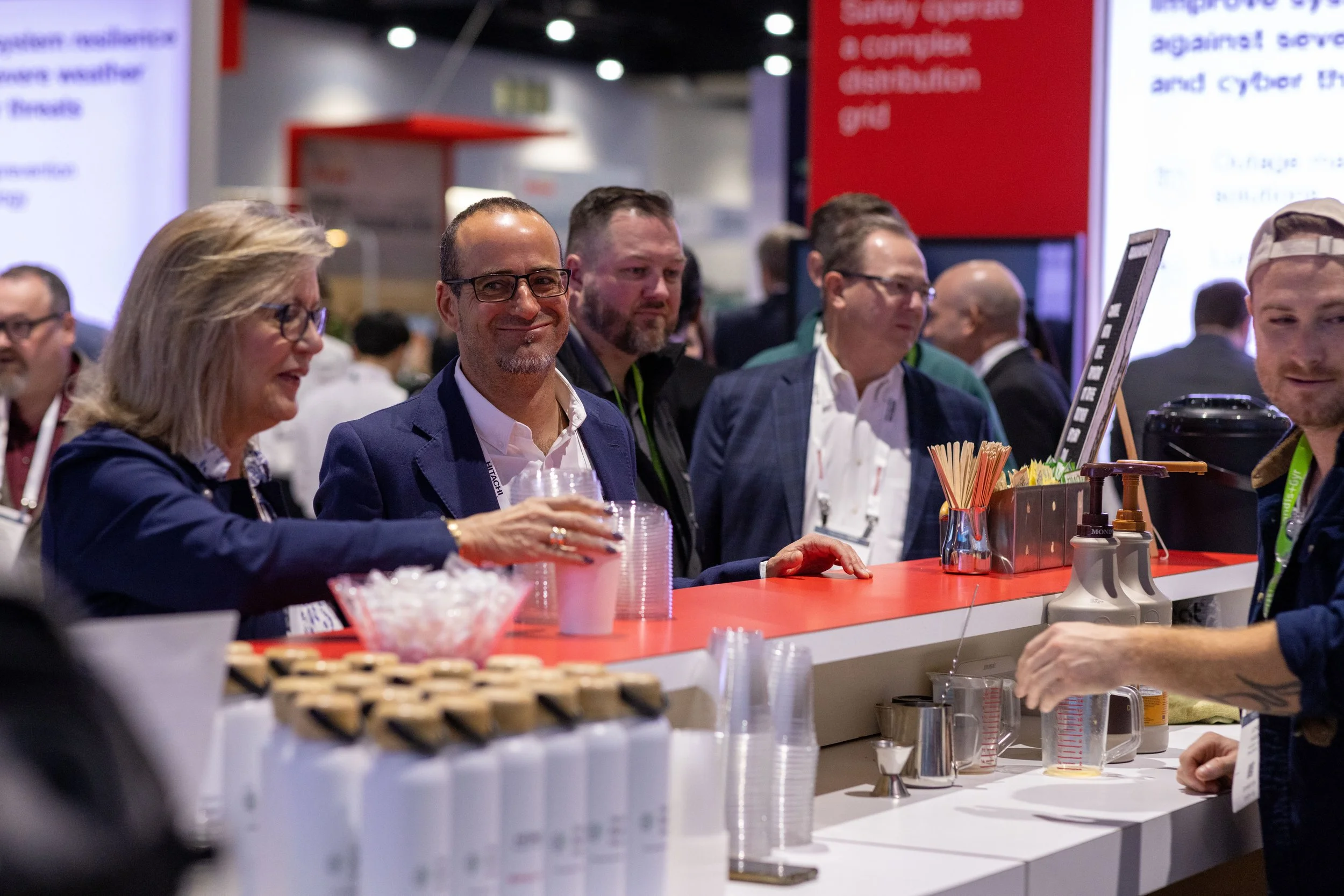
Can a mobile coffee bar serve hundreds of attendees per hour?
Yes. A professionally designed mobile coffee bar can serve hundreds of attendees per hour when staffed appropriately and equipped for high-volume service. Cold brew systems, efficient workflow design, and experienced baristas allow specialty coffee caterers to maintain short wait times while delivering premium beverages throughout busy convention schedules.
Building Efficient Service Stations
The physical design of a beverage station directly impacts guest experience.
A poorly designed station can create:
Professional event planners increasingly view beverage stations as strategic engagement hubs rather than simple refreshment areas.
The most effective setups focus on:
Visibility
Guests should immediately identify where beverages are available.
Accessibility
Stations should accommodate high foot traffic.
Speed
Fast transactions keep attendees moving.
Brand Experience
Coffee stations can reinforce event branding and sponsor visibility.
At large conferences, properly designed beverage service areas often become natural gathering points where networking and conversation occur organically.
This transforms coffee from a beverage expense into an attendee engagement tool.