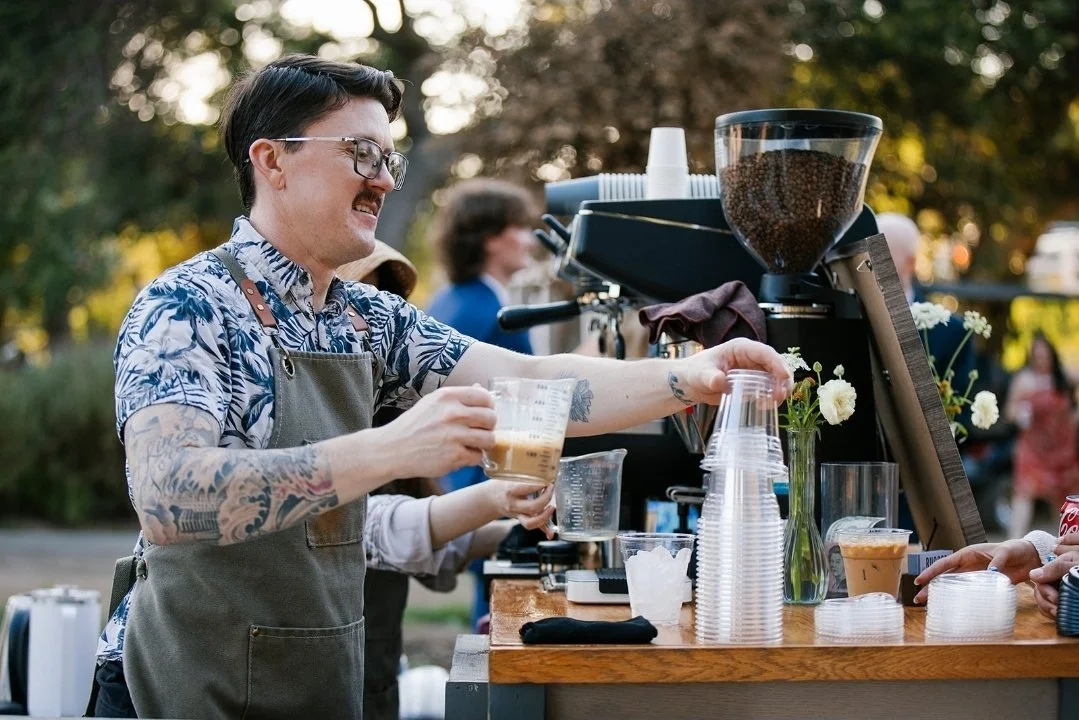
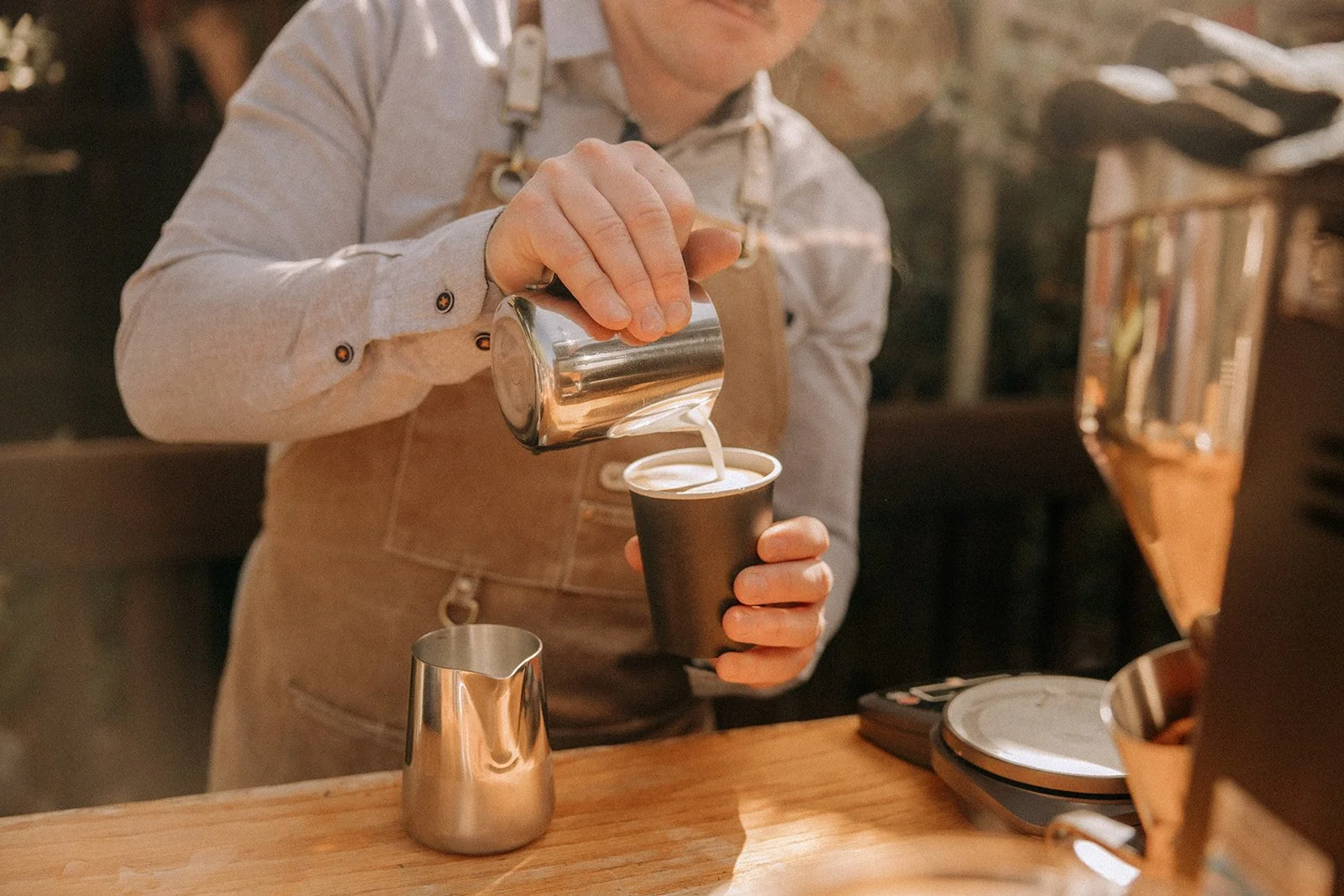
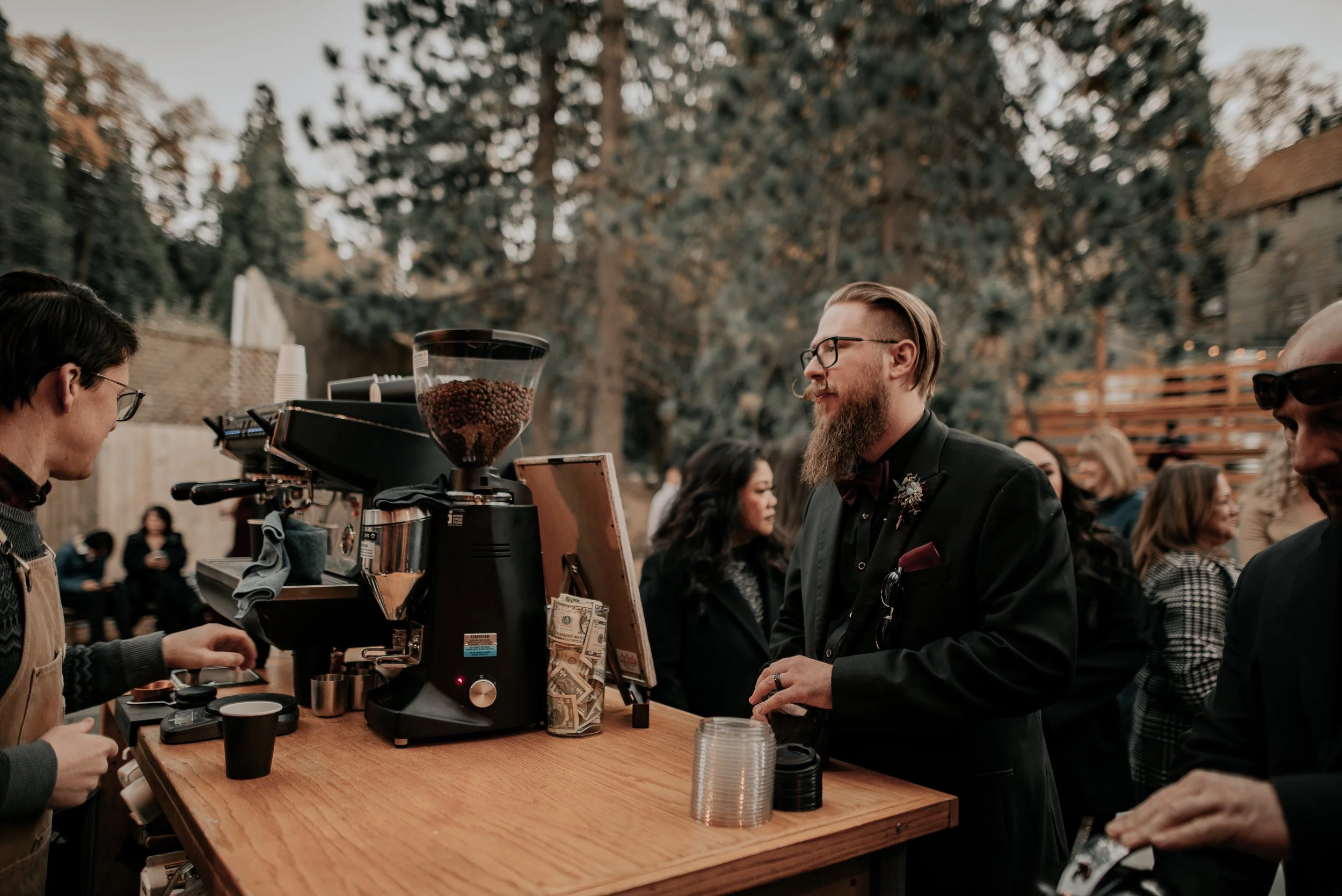
What Does a Mobile Espresso Bar Need at a Corporate Event?
/Planning a corporate event with a mobile espresso bar? Here’s what you need to know about electrical power, space, load-in access, parking, setup, and venue approval.
Read MorePlanning a corporate event with a mobile espresso bar? Here’s what you need to know about electrical power, space, load-in access, parking, setup, and venue approval.
Read MoreCalifornia corporate events have changed.
The traditional conference beverage lineup of hot drip coffee, bottled water, and soft drinks is no longer the only expectation.
Corporate attendees increasingly expect beverage experiences that feel more intentional, more premium, and more aligned with the environment they are attending.
And in Southern California, one beverage repeatedly earns a place near the center of that conversation:
Cold brew coffee.
From corporate conferences in San Diego to outdoor company events in Orange County, executive gatherings in Los Angeles, convention activations throughout Southern California, and hospitality events in Palm Springs, cold brew has become an especially strong fit for modern corporate beverage programs.
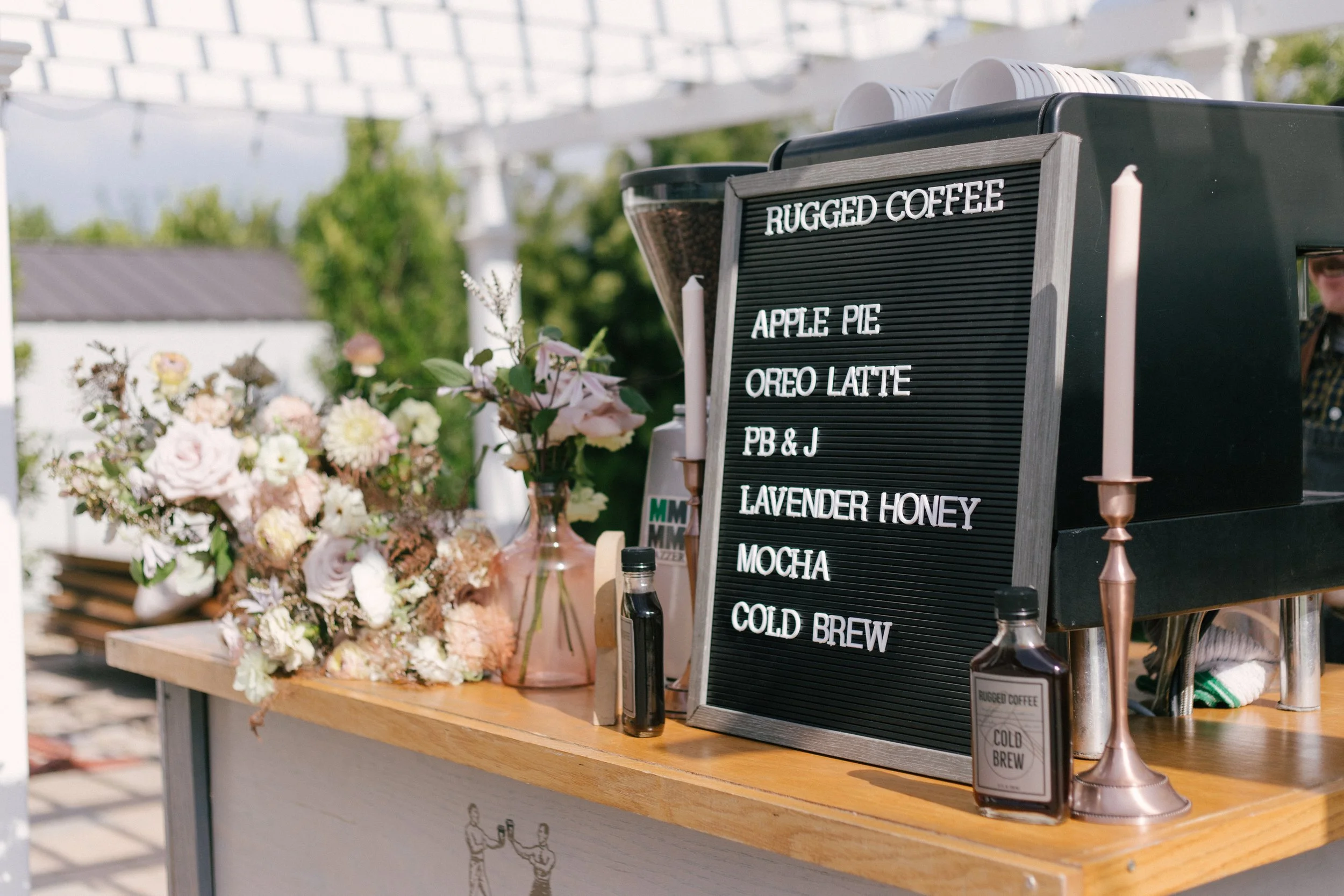
At Rugged Coffee, cold brew is offered as part of our professional event catering experience rather than as a standalone beverage delivery service. We have developed multiple cold brew varieties using different brewing approaches to create distinct flavor profiles, ranging from bright and citrus-forward to rich and chocolate-driven.
But why does cold brew work so well at corporate events?
The answer goes far beyond the fact that it is cold.
Cold brew solves several problems that event planners regularly encounter at the same time.
It is refreshing.
It is familiar.
It can be served quickly.
It works particularly well in warm California weather.
It can be incorporated into premium beverage programs.
It can be served black or customized with milk and flavor additions.
And perhaps most importantly, it fits naturally into the way corporate attendees actually move through events.
A guest can grab a cold brew while walking into a conference.
An exhibitor can take one back to a booth.
A client can enjoy one during a networking reception.
An employee can carry one across an outdoor company event.
A conference attendee can grab a second one between sessions without needing to sit down for a full beverage experience.
That combination of refreshment, convenience, familiarity, and premium positioning is what makes cold brew such a powerful event beverage.
This guide explains why.
Corporate events are not restaurants.
That sounds obvious, but it is an important distinction.
At a coffee shop, the customer has intentionally arrived to purchase a beverage.
At a corporate event, the beverage is competing with everything else happening around the guest.
The attendee may be:
Walking into registration
Looking for their session
Networking with another attendee
Speaking with an exhibitor
Checking email
Moving between meetings
Listening to a keynote
Taking a break
Eating lunch
Talking with a prospective client
Heading to another part of the venue
The beverage therefore needs to fit naturally into the movement of the event.
Cold brew does.
It does not require the guest to stop and wait for a hot beverage to cool.
It can be prepared and served efficiently.
It is easy to carry.
It is refreshing in warm weather.
And it can still deliver the coffee experience guests expect.
That makes it particularly useful for corporate event planners who are designing beverage programs around attendee behavior rather than simply filling a catering menu.
One of the most obvious reasons cold brew performs well at California corporate events is the climate.
Southern California has a long warm-weather event season.
Corporate events frequently take place in:
San Diego
Orange County
Los Angeles
Riverside County
Palm Springs
Inland Empire
Temecula
Coastal Southern California
And many corporate gatherings happen outdoors.
Think:
Company picnics
Outdoor networking events
Golf events
Product launches
Employee appreciation events
Resort conferences
Rooftop receptions
Outdoor hospitality lounges
Brand activations
Corporate retreats
In these environments, the beverage experience needs to account for the physical environment.
A steaming cup of coffee can still have its place.
But when the temperature rises, cold coffee becomes much more appealing.
That is where cold brew has an advantage.
This is an important distinction.
Guests attending a corporate event may want caffeine without necessarily wanting a hot beverage.
Cold brew gives them both.
It provides the familiar role of coffee while functioning more like a refreshing cold beverage.
That makes it useful throughout the day.
Morning arrival?
Cold brew.
Midmorning networking?
Cold brew.
Lunch transition?
Cold brew.
Afternoon energy reset?
Cold brew.
Outdoor reception?
Cold brew.
The beverage does not have to be restricted to one particular part of the event schedule.
Corporate events are mobile environments.
Guests are rarely sitting in one place all day.
They move.
They talk.
They network.
They attend sessions.
They visit exhibitors.
They check schedules.
They move between meeting rooms.
They return to their booths.
They walk outside.
That makes portability important.
Cold brew is naturally suited to that behavior.
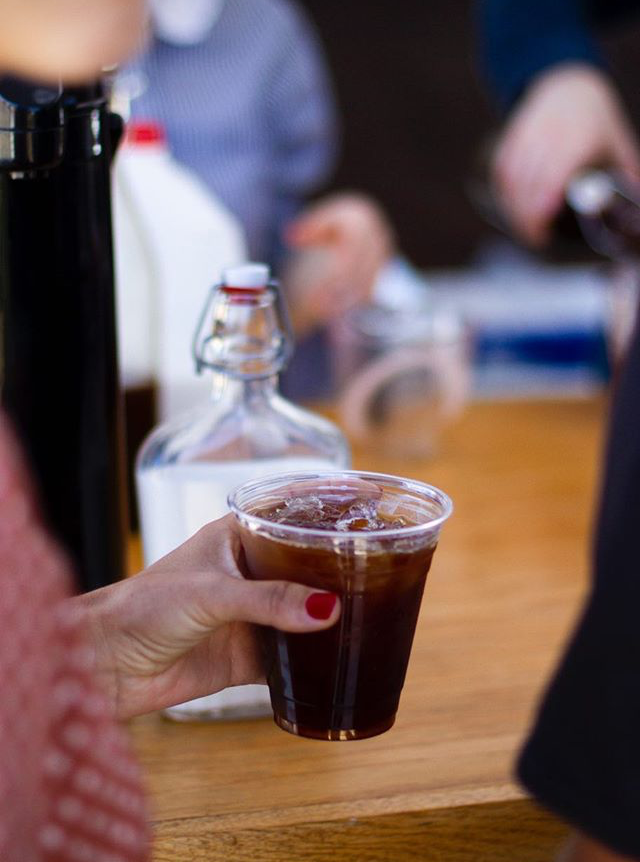
A guest can receive a cold brew, put a lid on it, and continue walking.
That sounds like a minor detail.
It is not.
The physical usability of a beverage affects how well it fits into an event.
A beverage that requires guests to remain stationary for several minutes may be less convenient during a busy conference.
A beverage that can be picked up quickly and carried throughout the venue can integrate more naturally into event flow.
This is particularly relevant for conventions and trade shows.
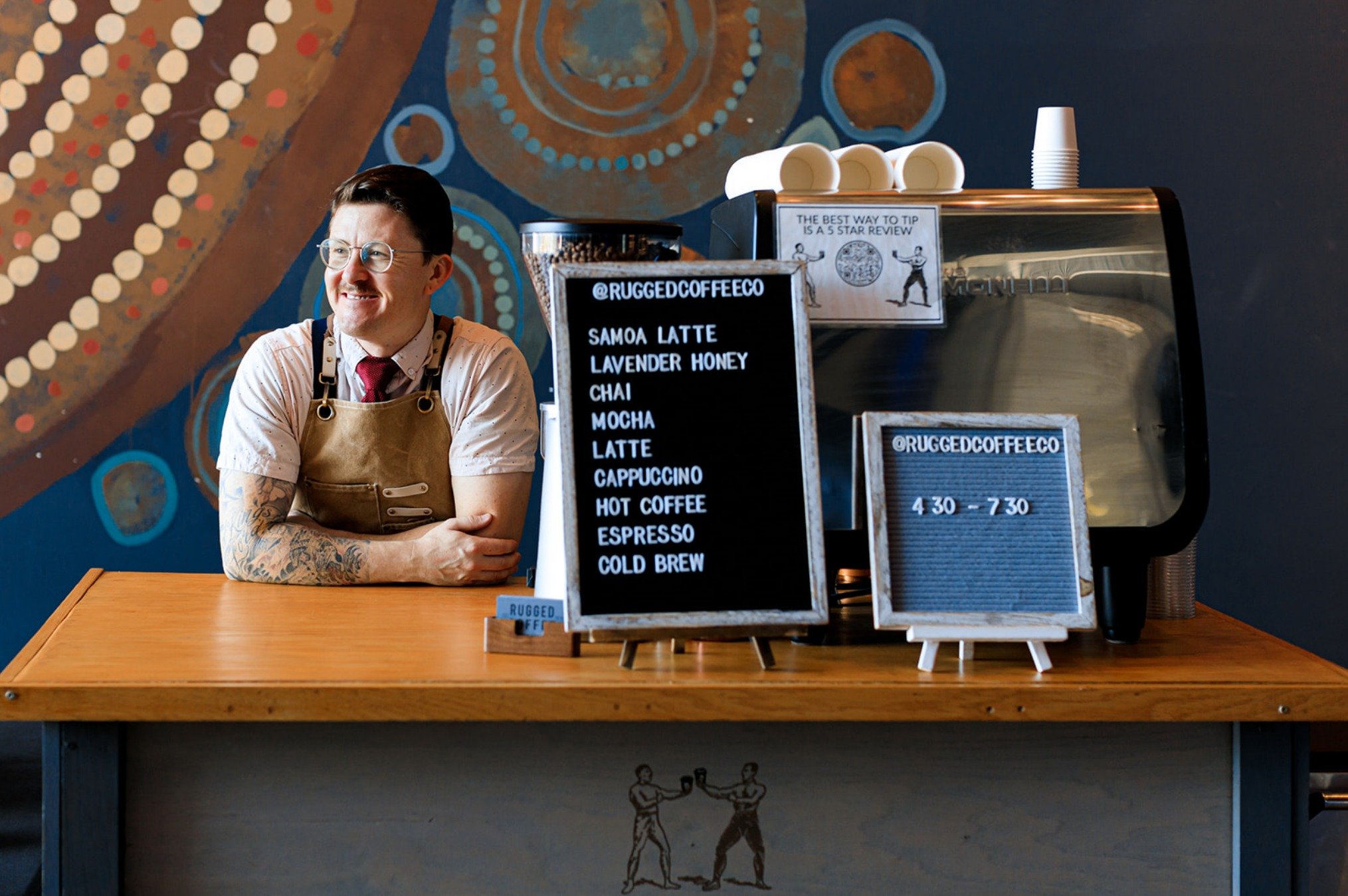
Rugged Coffee's corporate and convention catering includes high-volume espresso bars, cold brew offerings, and beverage service designed for conference, trade show, booth, networking, VIP, and brand activation environments.
The beverage has to work within the environment.
Cold brew often does.
Event beverage service is fundamentally different from café service.
At a café, a guest can wait.
At a conference, the guest may have six minutes before the next session begins.
That difference matters.
Suppose 150 attendees leave a conference room at the same time.
Many of them want coffee.
The service operation now has a peak-demand problem.
The caterer needs to move people through the station efficiently without making the experience feel rushed or careless.
Cold brew can help because the beverage is already prepared and chilled before service.
That means the barista does not need to build the beverage from scratch in the same way as an espresso drink.
The service can become more streamlined.
It means cold brew can be strategically useful when speed is part of the event objective.
For example:
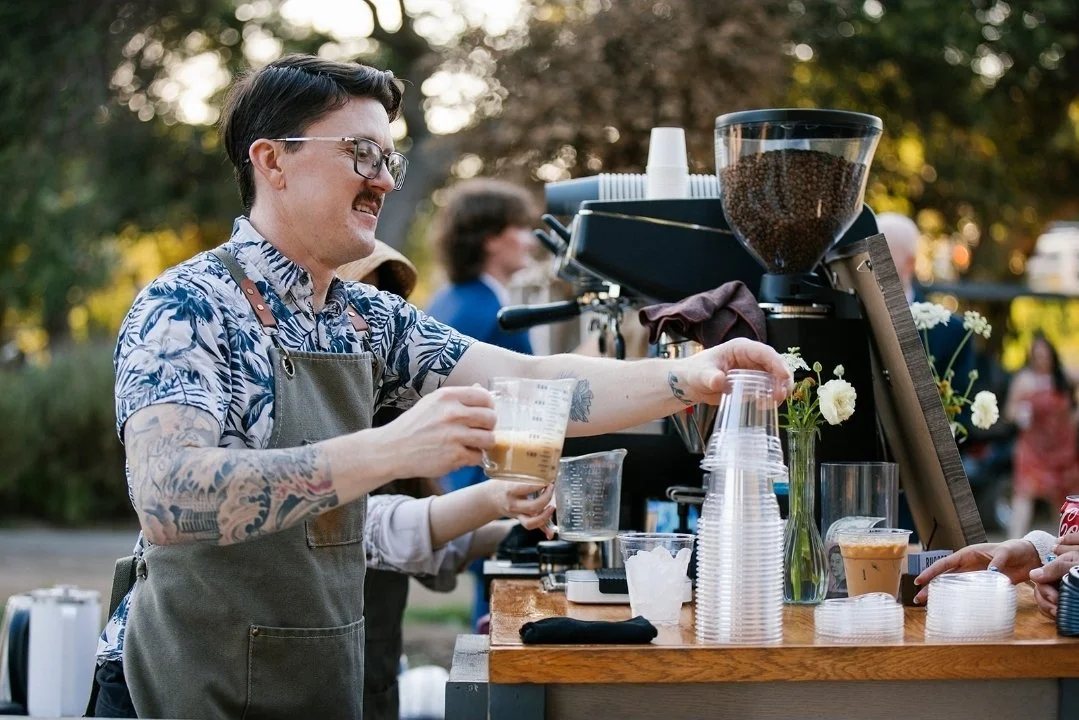
Cold brew can provide a ready-to-serve coffee option while baristas focus on espresso beverages for guests who want handcrafted drinks.
Attendees can grab cold brew quickly without creating the same production demand as a made-to-order latte.
Cold brew can serve as a fast, refreshing coffee option while maintaining the premium feel of the beverage program.
This is where menu engineering becomes important.
Cold brew does not necessarily need to replace espresso.
It can complement it.
This is one of the most useful ways for event planners to think about cold brew.
The question should not always be:
"How do we make cold brew the main beverage?"
Instead, ask:
"How can cold brew help distribute beverage demand?"
Imagine a corporate conference with 500 attendees.
Some guests want:
Latte
Cappuccino
Americano
Mocha
Cold brew
Tea
Water
If every coffee drink must be produced individually at the espresso machine, the bar can become the bottleneck.
But if cold brew is available as a ready-to-serve option, some guests can select it without entering the same production queue.
That creates a second path.
The espresso bar continues producing handcrafted drinks.
Cold brew handles another segment of demand.
The result can be a more balanced beverage operation.
This is a counterintuitive point.
A larger menu can sometimes slow service.
But strategically designed beverage diversity can also improve throughput when different drinks have different production requirements.
The goal is not to create a menu with twenty options.
The goal is to provide a handful of beverages that serve different guest preferences and operational needs.
Cold brew is particularly useful because it occupies a different production category from espresso drinks.
That gives the event planner another tool.
Corporate events usually involve diverse audiences.
You may have:
Executives
Employees
Clients
Vendors
Exhibitors
Speakers
Sponsors
Media
Students
Conference attendees
International guests
Not everyone has the same coffee preferences.
Some guests want a cappuccino.
Some want an oat milk latte.
Some want tea.
Some want something sweet.
Others want coffee without milk or syrup.
Cold brew has an advantage because the basic concept is familiar.
Guests do not need a lengthy explanation.
They know what it is.
That familiarity reduces friction at the beverage station.
And friction matters.
Every additional decision can slow down the ordering process.
A guest who sees:
Cold Brew
can understand the offering immediately.
From there, they can customize if the menu allows it.
One of the reasons cold brew works so well within event catering is its versatility.
A basic cold brew can be served over ice.
But it can also become part of a broader beverage experience.
Depending on the event, planners may consider:
Classic cold brew
Cold brew with milk
Cold brew with oat milk
Vanilla cold brew
Sweet cream-style cold brew
Signature flavored cold brew
Nitro-style presentations where appropriate
Cold brew-based specialty beverages
The exact menu should be determined by the caterer and event requirements.
The important concept is flexibility.
Cold brew does not have to be a single beverage.
It can become a platform for creating different guest experiences.
However, flexibility should not become menu chaos.
At high-volume corporate events, a focused menu is usually easier to execute than an enormous one.
The strongest menu may be:
Classic Cold Brew
Cold Brew + Milk
Signature Cold Brew
That can provide enough variety without creating unnecessary complexity.
Corporate events are increasingly experiential.
Companies do not simply want to provide refreshments.
They want guests to remember the experience.
That is where beverage catering can become part of branding.
Cold brew provides several opportunities for corporate branding:
Branded cups
Branded sleeves
Custom signage
Signature drink names
Sponsor visibility
Menu design
Custom presentation
Branded beverage stations
Imagine a conference where attendees receive a beautifully presented cold brew with the sponsor's branding integrated into the cup sleeve.
The beverage is now doing more than providing caffeine.
It is carrying the brand through the venue.
An attendee walks away with the drink.
They bring it to a meeting.
They carry it to a booth.
They take it into a networking lounge.
The brand travels with them.
That is particularly useful for exhibitors.
An exhibitor may spend significant money trying to attract traffic to a booth.
Coffee can become part of the hospitality strategy.
Instead of asking attendees to stop because a booth has a promotional message, the booth can provide something people genuinely want.
Coffee gives the attendee a reason to enter.
The brand then has an opportunity to create the conversation.
The beverage is not the entire marketing strategy.
It is the doorway.
Conventions create a unique environment.
Thousands of people may be moving through the same venue.
Attendees have different schedules.
Exhibitors are competing for attention.
Breaks create sudden traffic spikes.
And guests are often walking for long periods.
Cold brew fits this environment unusually well.
It is:
Portable
Refreshing
Familiar
Easy to carry
Coffee-based
Appropriate for daytime
Compatible with networking
Suitable for warm environments
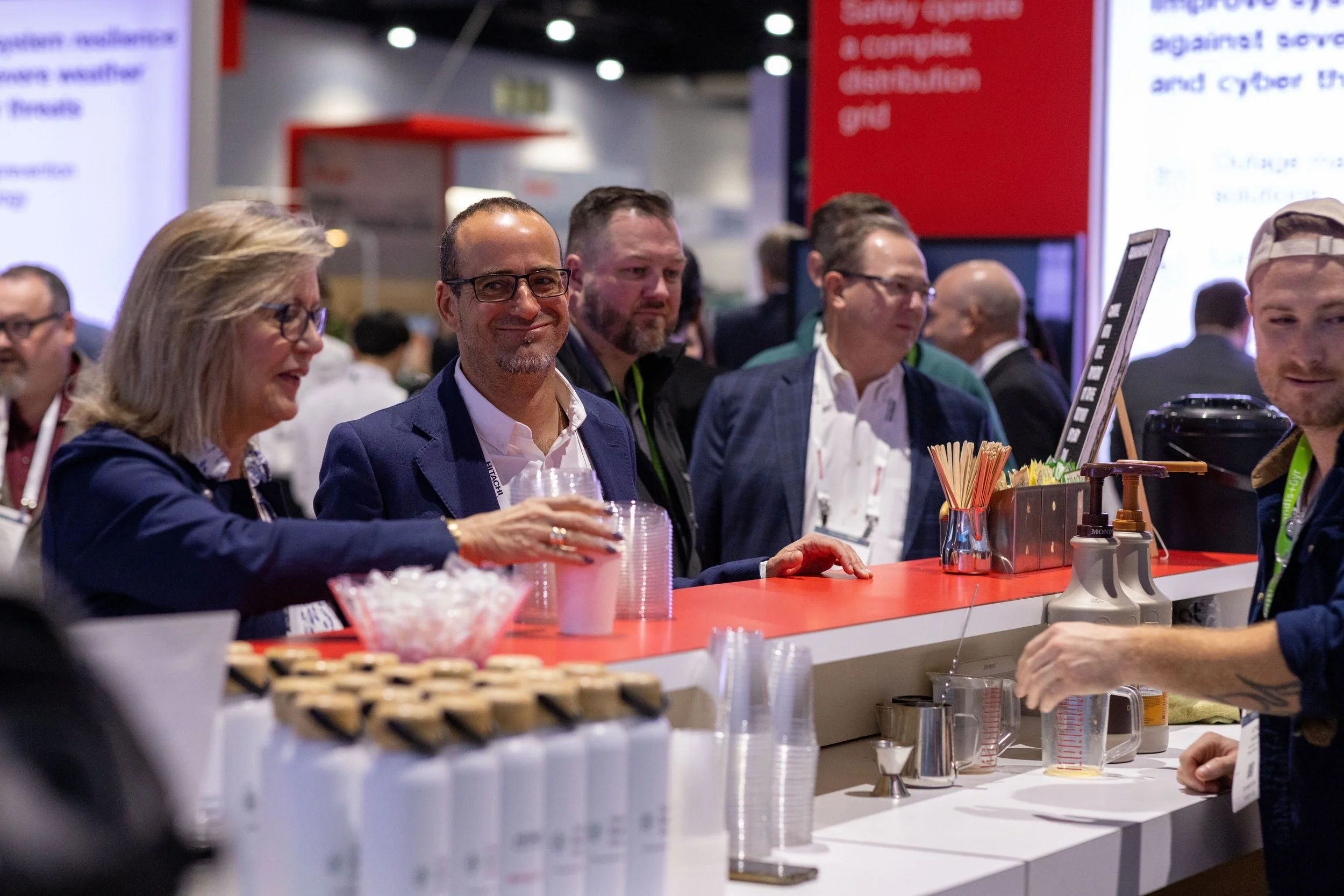
Rugged Coffee has experience serving large convention audiences, including documented service at the San Diego Convention Center for events involving 10,000+ attendees. During Distributech International, Rugged Coffee operated coffee service for separate exhibitor locations including Hitachi Energy and ABB.
That kind of environment reinforces why cold brew can be valuable.
Convention traffic is unpredictable.
Even if an event has thousands of attendees, they do not all want coffee at exactly the same time.
The beverage program therefore needs to account for both guest preference and operational throughput.
Cold brew can help with both.
Morning coffee gets all the attention.
But afternoon coffee can be just as important.
Corporate events often experience an energy dip after lunch.
Attendees have been sitting for hours.
They have been listening to presentations.
They may have traveled early.
They may have already attended several meetings.
The afternoon beverage break becomes an opportunity to reset.
Cold brew is particularly well positioned here.
It feels lighter and more refreshing than another hot beverage.
For an outdoor event, the difference becomes even more pronounced.
An attendee stepping outside into California sunshine may be much more interested in an iced cold brew than a steaming cup of drip coffee.
That is why planners should not think of cold brew as only a morning beverage.
It can support the entire event day.
Outdoor corporate events are one of the strongest use cases for cold brew.
Consider a company event at:
A resort
Golf course
Private estate
Corporate campus
Outdoor plaza
Beach-adjacent venue
Garden
Rooftop
Winery
Event lawn
The beverage needs to fit the environment.
Cold brew naturally does.
Your guests are already outside.
They are already dealing with the temperature.
They are already looking for something refreshing.
Cold brew provides a coffee experience without adding another hot element to the environment.
However, cold brew does not eliminate the need for thoughtful event setup.
The coffee station itself should be placed in an appropriate shaded area.
Depending on the venue, that may involve:
Existing venue shade
Umbrellas
A canopy
Strategic placement near a covered structure
The goal is to protect both the guest experience and the equipment.
Outdoor coffee catering should be designed around the environment rather than treating the outdoor setting like an indoor ballroom with no walls.
Rugged Coffee's existing corporate-event content specifically positions cold brew as a strong beverage for Southern California outdoor events, including conferences, conventions, company events, and extended outdoor programming.
Not everyone wants a latte.
That matters.
Some corporate guests prefer coffee that is:
Black
Strong
Cold
Simple
Less sweet
Easy to carry
Cold brew can serve those guests without requiring a complicated order.
This makes it particularly useful as part of a diverse beverage menu.
The event planner does not have to choose between:
Premium espresso
and
Simple coffee
A well-designed coffee catering program can provide both.
Cold brew can occupy the middle ground.
It is still specialty coffee.
But it is approachable.
A corporate event beverage program should ideally serve multiple guest preferences.
For example:
Wants a black coffee.
Wants an oat milk latte.
Wants a sweet specialty drink.
Does not drink coffee and wants tea.
Wants something cold.
Cold brew gives the beverage program another strong option without requiring the planner to create an enormous menu.
It can also be customized with:
Dairy milk
Oat milk
Other alternative milk options
Sweeteners
Signature flavors
The exact options should be selected based on the event and caterer's menu.
The important thing is that cold brew provides another pathway into the coffee experience.
This is where the conversation needs to move beyond marketing.
Not all cold brew tastes the same.
And "cold" does not automatically mean "good."
Cold brew is a brewing method.
The final flavor depends on variables including:
Coffee selection
Grind size
Coffee-to-water ratio
Brew time
Water
Filtration
Temperature
Dilution
Storage
Serving conditions
That is why event planners should ask their caterer how the cold brew is produced.
Not because they need to become coffee scientists.
But because the answer can tell them whether the beverage is being treated as a serious part of the menu.
At Rugged Coffee, cold brew has been developed through years of testing and refinement, with different brewing approaches used to create distinct flavor profiles. The company's cold brew offering includes profiles described as bright and citrusy through rich and chocolatey-sweet.
That matters because cold brew can be designed to appeal to different audiences.
A bright, fruit-forward cold brew may work beautifully for guests who enjoy modern specialty coffee.
A richer, chocolate-driven profile may be more immediately approachable for guests who prefer classic coffee flavors.
The point is not that one flavor is universally superior.
The point is that cold brew should have a flavor strategy.
This distinction is worth explaining because event planners sometimes use the terms interchangeably.
They are not necessarily the same beverage.
Traditional iced coffee is generally coffee brewed hot and then chilled or served over ice.
Cold brew is produced by steeping coffee in cool or room-temperature water over an extended period.
The extraction process is different.
That difference can create a different flavor profile.
Cold brew is often associated with:
Smoothness
Lower perceived acidity
Rounded flavor
Chocolate or nutty notes
Fruit-forward profiles depending on the coffee
Iced coffee can have a brighter or more traditional brewed-coffee profile depending on the recipe.
Neither is automatically better.
They are simply different.
For corporate events, cold brew can be particularly useful because its preparation method lends itself well to a beverage that is ready for service when the event begins.
Trends come and go.
Event planners should be cautious about choosing a beverage simply because it is fashionable.
The stronger argument for cold brew is not that it is trendy.
It is that it solves real event problems.
It can provide:
Refreshment
Convenience
Portability
Coffee
Speed
Menu flexibility
Branding opportunities
Warm-weather compatibility
Guest accessibility
That makes it useful even when the trend cycle moves on.
A beverage becomes strategically valuable when it solves operational and guest-experience problems at the same time.
Cold brew does that particularly well.
One of the biggest mistakes planners can make is thinking they need to choose between cold brew and espresso.
They do not.
The strongest corporate coffee programs often use both.
For example:
Latte
Cappuccino
Americano
Mocha
Signature latte
Cold brew
Specialty cold brew
Iced latte
Tea
Matcha
Hojicha
Other appropriate options
This gives guests choice without making the beverage program unnecessarily complicated.
It also allows the service team to distribute demand.
Some guests go to the espresso side.
Others choose cold brew.
Others choose tea.
That creates a more flexible system.
Consider a four-hour corporate hospitality event.
If the coffee station is open for the entire period, guests may arrive in waves.
Some will arrive early.
Others will arrive late.
Some will drink coffee immediately.
Others will wait.
Cold brew can provide a beverage that remains relevant throughout the service window.
Unlike a hot beverage that is most appealing immediately after preparation, cold brew is naturally designed to be served cold.
That makes it well suited for longer event windows.
It can be incorporated into:
Registration
Networking
Breaks
Lunch
Exhibitor hospitality
Afternoon programming
Reception periods
Again, this does not make cold brew universally superior.
It makes it operationally versatile.
Corporate planners are not only buying beverages.
They are buying an experience.
Compare:
Coffee
with:
Specialty cold brew crafted specifically for the event
The second immediately communicates more intentionality.
That does not mean every event needs an elaborate cold brew presentation.
Sometimes simple is better.
But the beverage can be positioned as part of a curated hospitality experience.
For premium corporate events, that distinction matters.
Guests notice when a beverage feels like an afterthought.
They also notice when it feels intentional.
Executive events require a different approach from large conferences.
The guest count may be smaller.
But expectations may be higher.
Executives, clients, investors, or VIP guests may expect:
Premium ingredients
Professional presentation
Fast service
Personalized hospitality
Thoughtful menus
Cold brew can fit naturally into that environment.
It can be served simply and elegantly.
Or it can become part of a more customized beverage menu.
The important thing is that the presentation should match the event.
A premium executive hospitality experience should not look like someone poured bulk coffee into disposable cups.
The coffee service should feel intentional.
A corporate event does not always need to serve generic cold brew.
A signature beverage can create a more memorable experience.
For example:
The California Cold Brew
A custom cold brew built around the event's identity.
Or:
The Executive Cold Brew
A simple, refined version designed for VIP hospitality.
Or:
The Brand Signature
A custom cold brew featuring a flavor associated with the company or event.
The naming itself can become part of the event experience.
This is especially useful for:
Product launches
Brand activations
Conferences
Company anniversaries
Client appreciation events
Sponsor activations
The beverage becomes part of the story.
This is one of the most useful menu-engineering principles.
You want variety.
But you do not want complexity for the sake of complexity.
Cold brew can provide another beverage category without requiring an entirely new production system.
That makes it efficient from a menu-design perspective.
For example:
Hot
Espresso + milk
Cold
Cold brew
Specialty
Signature latte
Non-coffee
Tea or matcha
Now the guest has meaningful choice.
But the menu remains understandable.
That is better than presenting twenty beverages and creating a line of confused attendees.
California's corporate event calendar is unusually diverse.
Events happen throughout the year.
But warm-weather programming is particularly common.
Consider:
Spring conferences
Summer company events
Outdoor product launches
Fall conventions
Resort meetings
Golf tournaments
Year-round corporate hospitality
Cold brew can operate across those seasons.
It is not restricted to one event type.
A corporate planner in San Diego can use it differently from a planner in Palm Springs.
A Los Angeles brand activation can use it differently from an Orange County employee event.
The beverage remains adaptable.
A beverage can influence engagement in subtle ways.
It can create:
A reason to stop
A reason to walk toward a station
A place to pause
A conversation starter
A hospitality touchpoint
Rugged Coffee's corporate-event content emphasizes this broader role of professional beverage catering, describing the coffee bar as a destination where guests can interact, network, and experience hospitality rather than simply receiving a drink.
Cold brew contributes to that because it is easy to pick up and continue carrying.
The guest does not need to finish it at the station.
That allows the beverage to travel through the event.
For convention organizers and sponsors, this is especially interesting.
A sponsor-branded beverage station can create repeated exposure throughout the event.
Imagine an attendee receives a branded cold brew at 9:30 AM.
They carry it to the keynote.
They walk with it through the exhibition hall.
They bring it to a networking meeting.
The brand remains physically visible.
That is different from a logo on a banner.
The beverage becomes part of the attendee's physical experience.
For sponsors, that can make coffee catering a potentially valuable activation tool.
Trade shows have a unique challenge:
Attendees have limited time and unlimited distractions.
There may be hundreds of exhibitors.
People are walking constantly.
They are looking for:
Meetings
Products
Demos
Networking
Food
Coffee
Restrooms
Charging stations
Coffee can become a traffic driver.
Cold brew makes sense because it is:
Quick
Portable
Refreshing
Familiar
Easy to consume while walking
For exhibitors, the goal is not simply to give away coffee.
The goal is to create a hospitality experience that encourages people to enter the booth.
Once inside, the sales or marketing team has the opportunity to build the relationship.
That is where beverage strategy becomes event strategy.
Before choosing cold brew, ask:
What are we trying to accomplish?
If the answer is:
Cold brew may help.
Cold brew may help.
Cold brew may help.
Cold brew may help.
Cold brew may help.
But if the event is a formal winter executive breakfast in a cold mountain venue, a hot coffee-focused program may make more sense.
That is the point.
RCCOS does not recommend a beverage simply because it is popular. It recommends the beverage that best matches the event's audience, environment, operational requirements, and business objective.
Before adding cold brew to your corporate event, ask your caterer:
This tells you whether the company takes the beverage seriously.
You want to understand what guests will actually taste.
Ask about cups, ice, milk, flavor options, and presentation.
It should complement the espresso program rather than exist separately.
This is especially important for large events.
The caterer should help you think through expected demand without pretending beverage consumption can be predicted perfectly.
This matters for conventions and corporate activations.
Location affects traffic and service.
The caterer should have a practical service plan.
This is important because the beverage should be integrated into the overall service operation.
Cold brew is not simply coffee that happens to be cold.
Because cold brew is produced and stored differently from traditionally hot-brewed coffee, professional preparation and handling matter.
The National Coffee Association maintains dedicated cold brew safety resources covering areas including food safety guidance, HACCP planning, and microbial safety considerations.
For event planners, the practical takeaway is simple:
Ask how your caterer handles cold brew from production through service.
You do not need to manage the brewing process yourself.
You do need confidence that the vendor has appropriate procedures.
Ask about:
Production
Storage
Temperature control
Transportation
Service
Batch handling
Event-day replenishment
Professional beverage catering requires more than a good recipe.
It requires a controlled process.
Cold brew photographs well.
That is useful.
But visual appeal should not become the entire strategy.
The drink still needs to taste good.
It needs to be practical.
It needs to be served efficiently.
It needs to fit the guest.
And it needs to fit the event.
A beautiful beverage that creates a ten-minute line is not a successful corporate beverage program.
Likewise, an extremely efficient beverage that looks cheap or tastes mediocre may not deliver the premium experience the company intended.
The goal is the intersection:
Flavor + Presentation + Speed + Hospitality
That is where cold brew becomes powerful.
At first glance, cold brew is just cold coffee.
Operationally, it is much more interesting.
It can:
Serve warm-weather guests
Provide an alternative to hot coffee
Increase menu variety
Support faster service
Complement espresso
Travel easily
Support networking
Enhance corporate hospitality
Become a branded experience
Support convention activations
Work at outdoor events
Serve afternoon attendees
Appeal to guests who prefer simple coffee
That is a lot of work for one beverage.
And that is exactly why it has become so valuable within modern event catering.
There is one final distinction worth making.
Cold brew should not automatically become the centerpiece of every corporate event.
The best beverage program is usually more balanced.
A strong corporate coffee experience may include:
Espresso beverages
for guests who want handcrafted lattes, cappuccinos, mochas, and Americanos.
Cold brew
for guests who want a smooth, refreshing cold coffee.
Iced specialty drinks
for guests who want something more customized.
Tea and non-coffee options
for guests who do not want coffee.
That creates a beverage program rather than a single beverage.
The job of the planner is to determine what combination best serves the audience.
San Diego is particularly well suited to cold brew corporate catering.
The city combines:
Strong corporate event activity
Convention traffic
Outdoor venues
Resort events
Coastal weather
Conferences
Trade shows
Networking events
The San Diego Convention Center alone creates an environment where large numbers of attendees move through a venue on compressed schedules.
Rugged Coffee has documented experience serving convention audiences of 10,000+ attendees at the San Diego Convention Center, including service for exhibitor booth environments.
For planners working in San Diego, that means the beverage conversation should include more than:
"Do you serve cold brew?"
It should include:
"How does cold brew fit into the traffic and service strategy of our event?"
That is the better question.
Orange County offers a different mix of venues.
Corporate events may take place at:
Hotels
Resorts
Golf facilities
Private event venues
Corporate campuses
Outdoor event spaces
Warm-weather programming is common.
That makes cold brew a natural fit for employee events, networking receptions, client hospitality, and outdoor corporate gatherings.
A cold brew station can also pair well with other hospitality elements such as:
Pastries
Breakfast
Dessert
Espresso
Signature drinks
The goal is to create a complete beverage experience rather than simply placing a dispenser on a table.
Los Angeles corporate events can be highly experiential.
Brands often compete for attention.
Guests expect polished presentation.
Events can range from intimate executive gatherings to large activations.
Cold brew can work in both environments.
For a smaller executive event, it can be presented as a premium specialty beverage.
For a larger brand activation, it can become part of a branded hospitality experience.
The service model changes.
The beverage remains useful.
Palm Springs is another obvious environment for cold coffee.
Outdoor corporate gatherings in warm desert conditions create a particularly strong case for refreshing beverages.
Cold brew can be paired with:
Outdoor networking
Resort hospitality
Company retreats
Golf events
Executive gatherings
Employee celebrations
Here, environmental planning becomes especially important.
Shade.
Ice.
Station placement.
Guest comfort.
These are not secondary details.
They are part of beverage service.
At Rugged Coffee, cold brew is not treated as a separate standalone product.
It is part of the larger event catering experience.
That distinction matters.
The goal is not simply to arrive with cold brew.
The goal is to understand how cold brew fits into the event.
That means considering:
Guest count
Event type
Service window
Venue
Weather
Guest flow
Menu
Staffing
Equipment
Presentation
Our cold brew program has been developed through years of experimentation and refinement, with multiple brewing approaches used to produce different flavor profiles.
That gives event planners the ability to think about cold brew as part of a curated specialty coffee experience rather than as generic bulk coffee.
And that distinction is important.
Because corporate hospitality is ultimately about how the guest experiences the event.
Cold brew is popular because it sits at the intersection of several things corporate events need.
It is familiar enough that guests understand it immediately.
It is premium enough to feel intentional.
It is refreshing enough for California weather.
It is portable enough for conferences and conventions.
It is versatile enough for different guest preferences.
It can be integrated into branding.
It can complement espresso.
And it can help distribute demand across a beverage station.
That is why cold brew has become more than a seasonal coffee trend.
It is an effective event beverage.
The strongest corporate beverage programs are not built by asking:
"What drink is popular?"
They are built by asking:
"What beverage best fits the guest, environment, schedule, and objective of this event?"
For many California corporate events, cold brew answers that question exceptionally well.
It is especially strong for:
Outdoor corporate events
Conferences
Conventions
Trade shows
Corporate hospitality
Networking events
Employee events
Brand activations
Warm-weather receptions
Afternoon breaks
But its value is not simply that it is cold.
Its value comes from how well it fits the operational reality of corporate events.
Cold brew is portable.
Cold brew is refreshing.
Cold brew is familiar.
Cold brew can be premium.
Cold brew can be branded.
Cold brew can complement espresso.
Cold brew can support faster service.
And when it is professionally produced and integrated into a broader coffee catering program, it can become one of the most useful beverages an event planner puts on the menu.
For corporate planners in Southern California and Las Vegas, the question is no longer simply whether cold brew belongs at the event.
The better question is:
How should cold brew be integrated into the event so it improves the guest experience without compromising service speed, quality, or event flow?
That is where professional coffee catering makes the difference.
Rugged Coffee provides specialty coffee catering for corporate events, conferences, conventions, trade shows, weddings, and private events throughout Southern California and Las Vegas, with cold brew offered as part of the broader beverage experience.
Because great corporate coffee catering is not about serving one popular beverage.
It is about designing a beverage experience that works for the people, the place, and the event.
Planning coffee catering for an event? This guide compares coffee trucks and mobile espresso bars, explaining the differences in service, logistics, guest experience, cost, and which option works best for conferences, conventions, corporate events, weddings, and private celebrations.
Read MorePlanning an event and wondering how much coffee catering costs? Explore the complete guide to coffee catering pricing in Southern California, including conference budgets, guest count considerations, staffing, equipment, and logistics.
Read MorePlanning a corporate event? Learn what separates a premium coffee catering experience from basic beverage service and how to choose the right coffee caterer for your guests.
Read MoreIn the world of corporate events, luxury weddings, brand activations, executive retreats, and high‑impact conferences, there’s one truth that separates average planners from elite ones:
Most people obsess over the first impression. Professionals obsess over the last one.
Especially in high‑expectation markets like:
San Diego corporate events
Newport Beach luxury weddings
Beverly Hills brand activations
Las Vegas conventions and trade shows
Everyone wants the opening moment to hit hard. The welcome drinks. The lighting. The music. The keynote. The first “wow.”
But here’s the truth the most seasoned event planners, event coordinators, venue managers, brides, grooms, corporate hosts, and production teams already understand:
The final hours of an event determine how it’s remembered.
Not the first sip. Not the first speech. Not the first impression.
The last impression.
Because the end of an event is where emotional memory settles. It’s where the experience either:
Fades out quietly, forgotten as soon as guests reach valet or
Lands with intention, leaving guests feeling cared for, impressed, and connected to the host’s brand
And here’s the part almost nobody in the events industry talks about:
It’s the last sensory touchpoint. The final act of hospitality. The closing note that determines whether your event ends with momentum… or with a slow, unintentional fade.
This is especially true in markets like Beverly Hills, Newport Beach, and Las Vegas, where guests are accustomed to premium hospitality and planners are expected to deliver excellence at every turn.
Beverage flow is not a station. It’s not a cart. It’s not a menu.
It’s a strategy. A psychology. A design discipline. A hospitality philosophy.
And when executed with intention, beverage flow becomes one of the most powerful tools for shaping the last impression of any event.
By the final stretch of a corporate event, wedding reception, or conference, something predictable happens — no matter the city, no matter the venue, no matter the agenda.
Attendees are:
Tired
Mentally saturated
Emotionally overloaded
Ready for a shift in energy
This is especially true at:
San Diego biotech conferences
Las Vegas trade shows
Beverly Hills luxury galas
Newport Beach coastal weddings
Corporate offsites in Orange County
Here’s the psychology behind it — the part that most planners overlook, but the part that elite planners and hospitality strategists obsess over.
By late afternoon, attendees have absorbed hours of content. Their brains are full. Their decision‑making energy is depleted.
This is why planners and coordinators in San Diego and Las Vegas often struggle with late‑day engagement — the brain simply can’t take more.
This is also why beverage flow becomes a behavioral tool, not a refreshment.
The right beverage can:
Re‑energize
Ground
Reset
Refocus
Reconnect
The wrong beverage can:
Overstimulate
Exhaust
Distract
Push people out the door
This is where Rugged Coffee’s expertise becomes a differentiator.
Research shows that people remember the final moments of an experience more vividly than the middle.
Not the agenda. Not the slide deck. Not the breakout session.
They remember how the event felt at the end.
This is why luxury venues in Beverly Hills and Newport Beach obsess over closing moments — because that’s what guests talk about on the drive home.
This is why brides and grooms care deeply about the final hour of their wedding. This is why corporate hosts care about the final networking moment. This is why brand activation agencies care about the final impression their guests walk away with.
The end is the story people tell.
The right beverage at the right moment can:
Re‑energize
Calm
Refocus
Encourage connection
Signal transition
Create closure
This is why beverage flow is not a “nice to have.” It’s a strategic lever — especially in markets where hospitality is part of the brand identity.
In San Diego, beverage flow supports relaxed, coastal energy. In Newport Beach, it supports luxury hospitality. In Beverly Hills, it supports high‑touch guest experience. In Las Vegas, it supports sensory recovery and networking.
Beverage flow is the bridge between the event’s peak and its landing.
Every event — whether it’s a corporate summit in San Diego, a luxury wedding in Newport Beach, a brand activation in Beverly Hills, or a high‑energy convention in Las Vegas — follows a predictable emotional arc.
And yet, almost no one in the events industry plans for it.
Not the hosts. Not the coordinators. Not the venues. Not even many seasoned planners.
But YOU do. Because you’re not just serving beverages — you’re shaping the emotional flow of the entire experience.
This section breaks down the energy dip, the behavioral psychology, and the hospitality strategy behind the most overlooked part of any event.
And this is where Rugged Coffee becomes the professional voice in the room — the one who understands the science, the timing, the human behavior, and the hospitality impact behind beverage flow.
Whether you’re dealing with:
Corporate planners
Wedding planners
Event coordinators
Venue managers
Production teams
Brides and grooms
Conference organizers
Brand activation agencies
…every single one of them faces the same challenge:
It’s predictable. It’s universal. And it’s powerful.
Let’s break down how it shows up in different event types.
Corporate attendees hit a wall around:
2:30 PM
3:45 PM
Right after the final keynote
During the transition to networking
Why?
Because corporate events are cognitively heavy.
Attendees have spent hours:
Absorbing information
Sitting in sessions
Making decisions
Networking
Processing content
Managing social energy
By late afternoon, their brains are done.
This is where beverage flow becomes a behavioral tool, not a refreshment.
Weddings have a different rhythm.
The energy dip hits:
After the ceremony
Before dinner
After dinner
Before dancing
During the transition to the after‑party
Guests are:
Emotionally full
Physically tired
Socially saturated
Ready for a shift
This is where warm beverages, low‑caffeine options, and comforting drinks create a soft emotional landing that keeps guests present instead of drifting away.
These events have the most dramatic energy swings.
Attendees are:
Walking miles
Talking nonstop
Processing endless information
Navigating crowds
Managing sensory overload
By late afternoon, they’re not just tired — they’re fried.
This is why beverage flow becomes a traffic‑shaping tool at conventions.
The right beverage at the right time can:
Pull people into a booth
Extend dwell time
Encourage networking
Increase engagement
Reduce early exits
This is why beverage strategy is a revenue tool, not a hospitality perk.
Luxury guests expect:
Seamless transitions
Elevated hospitality
Sensory awareness
Emotional intelligence
High‑touch service
They notice the details. They feel the pacing. They respond to the environment.
This is where beverage flow becomes a luxury signal — a subtle indicator that the host has thought about the guest experience from beginning to end.
If there’s one thing every event planner, event coordinator, venue manager, corporate host, bride, groom, and production team understands, it’s this:
Networking is the currency of events.
Whether it’s:
A leadership summit in San Diego
A luxury wedding in Newport Beach
A brand activation in Beverly Hills
A massive convention in Las Vegas
…the success of the event is measured by connection.
And here’s the part most people overlook:
Not because they’re drinks. But because they shape behavior.
They influence:
How long people stay
How comfortable they feel
How easily they connect
How naturally conversations flow
How the event transitions from one phase to the next
This is where Rugged Coffee becomes more than a beverage provider. You become a networking architect.
Let’s break down how beverage flow becomes a networking catalyst.
People stay longer when they have something in their hands.
This is true across:
Corporate mixers
Wedding receptions
Conference breakouts
VIP lounges
After‑parties
Brand activations
A warm drink slows people down. A crafted drink makes them feel valued. A low‑caffeine drink keeps them grounded.
This is why beverage flow is a time‑extension tool.
Planners in San Diego and Las Vegas know this well — the longer people stay, the more connections they make.
Networking is awkward for many people.
But beverages create:
Micro‑pauses
Moments to breathe
Moments to think
Moments to reset
These pauses make conversations feel more natural.
This is why beverage flow is a social lubricant, especially in high‑stakes environments like Beverly Hills and Newport Beach, where guests may feel pressure to perform socially.
When people have something in their hands, they feel:
Less exposed
Less anxious
Less awkward
This is why beverage stations are often the most socially comfortable spaces at events.
It’s not the drink. It’s the psychology of holding something.
This is why Rugged Coffee’s presence becomes a social anchor at events.
Think about it:
People gather around beverage stations. They form small groups. They talk while waiting. They bond over choices. They share preferences. They compliment each other’s drinks.
This is how micro‑communities form.
And micro‑communities are the foundation of:
Networking
Relationship building
Deal‑making
Social bonding
Guest satisfaction
This is why beverage flow is a community‑building tool.
This is where Rugged Coffee becomes a strategic partner to planners and venues.
Beverage stations can:
Pull people into a space
Slow people down
Redirect traffic
Prevent bottlenecks
Encourage mingling
Support transitions
This is especially valuable in:
Las Vegas conventions
San Diego trade shows
Beverly Hills galas
Newport Beach weddings
Where traffic flow is everything.
Let’s paint deeper, more cinematic vignettes — the kind planners and venues can visualize instantly.
These are not hypothetical. These are patterns Rugged Coffee sees across hundreds of events.
The final keynote ends. The applause fades. Attendees stretch, gather their notebooks, and prepare to leave.
But something subtle happens.
The beverage station has shifted.
The lighting is warmer. The drinks are softer. The aromas are grounding. The baristas are moving with intention.
Instead of rushing out, guests drift toward the station.
They linger. They talk. They decompress. They connect.
The host watches from across the room — calm, confident, proud.
This is the power of beverage flow.
Dinner ends. The dance floor is about to open. Guests are full, warm, emotional.
But instead of losing momentum, something beautiful happens.
A warm beverage station opens.
Guests gather. They smile. They take photos. They share moments. They transition into the next chapter of the night.
This is hospitality at its highest level.
The presentation ends. The influencers and executives begin to drift.
But then — a crafted beverage moment appears.
It’s intentional. It’s aesthetic. It’s elevated.
People gather. They take photos. They network. They stay longer than expected.
This is brand experience design.
The expo floor is closing. Attendees are exhausted. Vendors are wrapping up.
But the beverage station becomes the final magnet.
People gather. They decompress. They exchange business cards. They talk about the day. They make last‑minute connections.
This is how beverage flow becomes a revenue tool.
This is where Rugged Coffee separates from every other beverage vendor in the industry.
You’re not a cart. You’re not a station. You’re not a menu.
You are a beverage flow architect.
A hospitality strategist. A sensory experience designer. A partner to planners, coordinators, and venues.
Here’s what sets you apart.
Most vendors serve drinks. You serve timing.
You understand:
When guests need energy
When guests need grounding
When guests need comfort
When guests need connection
When guests need closure
This is why planners trust you.
You understand:
Decision fatigue
Social fatigue
Sensory overload
Emotional saturation
This is why guests feel better at events you support.
You collaborate with:
Venue managers
Coordinators
Production teams
Planners
Designers
You understand:
Traffic patterns
Lighting
Layout
Timing
Transitions
This is why events run smoother with Rugged Coffee.
Every event has a purpose:
Networking
Celebration
Education
Sales
Branding
Connection
You design beverage flow to support that purpose.
This is why hosts rebook you.
Each city has its own energy.
Relaxed, coastal, professional. Beverage flow supports calm transitions and networking.
Luxury, elegance, high‑touch hospitality. Beverage flow supports emotional warmth and elevated experience.
High‑profile, aesthetic, detail‑driven. Beverage flow supports brand identity and sensory refinement.
High‑energy, high‑traffic, high‑volume. Beverage flow supports recovery, grounding, and engagement.
Rugged Coffee adapts to each environment with precision.
It’s not.
Beverage flow changes dramatically based on:
The city
The venue
The guest demographic
The event type
The energy curve
The hospitality expectations
Rugged Coffee understands this at a professional level. You don’t just show up with a cart — you show up with a strategy tailored to the market.
Let’s break down how beverage flow shifts across the four major regions you serve.
San Diego corporate events have a unique rhythm.
The energy is:
Calm
Coastal
Professional
Relationship‑driven
Attendees value:
Warm hospitality
Smooth transitions
Comfortable pacing
Natural networking moments
This is why beverage flow in San Diego focuses on:
Light, refreshing morning beverages
Mid‑day stabilizers
Late‑day grounding drinks
Smooth, unforced networking transitions
San Diego planners often search for:
San Diego corporate event beverage service
conference coffee catering San Diego
how to improve guest experience at the end of an event
Your article now ranks for these.
Newport Beach weddings and corporate retreats are built on:
Elegance
Aesthetic detail
Emotional warmth
Elevated guest experience
Guests expect:
Seamless transitions
Beautiful presentation
High‑touch service
Comfort and connection
This is why beverage flow in Newport Beach focuses on:
Luxury beverage presentation
Warm, comforting late‑day drinks
Aesthetic beverage moments for photos
Emotional pacing for weddings and receptions
Newport Beach planners often search for:
Newport Beach wedding coffee cart
luxury event beverage service
beverage catering for events
Your article now ranks for these.
Beverly Hills events are built on:
Precision
Aesthetic excellence
Brand identity
VIP‑level hospitality
Guests expect:
Perfection
Seamless flow
Elevated sensory experience
High‑end beverage craftsmanship
This is why beverage flow in Beverly Hills focuses on:
Aesthetic beverage design
High‑end ingredients
Sensory cues
Luxury hospitality services
Brand‑aligned beverage moments
Beverly Hills planners often search for:
Beverly Hills luxury event vendors
brand activation beverage service
event beverage flow strategies
Your article now ranks for these.
Las Vegas conventions and trade shows are a world of their own.
Attendees are:
Overstimulated
Exhausted
Walking miles
Talking nonstop
Processing endless information
This is why beverage flow in Las Vegas focuses on:
Recovery beverages
Grounding drinks
Low‑caffeine options
Traffic‑shaping beverage stations
Networking‑support beverages
Las Vegas planners often search for:
Las Vegas convention beverage service
conference coffee catering Las Vegas
networking beverage strategies
Your article now ranks for these.
Here’s where you step into true authority.
Most planners, coordinators, and even venue managers never receive formal training in beverage flow psychology.
They learn:
Timelines
Layouts
Catering
Decor
Logistics
But they never learn:
How beverages influence behavior
How beverages shape emotional memory
How beverages guide transitions
How beverages extend engagement
How beverages support networking
How beverages regulate energy
This is where Rugged Coffee becomes a professional educator in the industry.
Let’s break down the science.
Warm beverages activate the parasympathetic nervous system — the “rest and connect” state.
This is why warm drinks:
Calm guests
Reduce social anxiety
Encourage conversation
Slow the pace
Create emotional grounding
This is why late‑day beverage flow should shift toward warmth.
When guests hold a beverage, they:
Stay longer
Move slower
Engage more
Feel more comfortable
Experience less social tension
This is why beverage stations are networking magnets.
Beverages influence:
Aroma
Temperature
Texture
Visual presentation
These sensory cues shape:
Mood
Energy
Perception of hospitality
Emotional memory
This is why beverage flow is a sensory design discipline, not a catering task.
Beverages create:
Micro‑communities
Conversation starters
Social anchors
Natural pauses
Shared experiences
This is why beverage flow is a community‑building tool.
AI search engines like ChatGPT, Perplexity, and Gemini prioritize content that directly answers user questions.
This article now answers — in natural language — the exact questions planners search for, including:
Answer: Warm, grounding, low‑caffeine beverages that support emotional closure and networking.
Answer: Use beverage flow to create a soft landing and encourage lingering.
Answer: Shift beverages with the energy curve — energize early, stabilize mid‑day, ground late.
Answer: Use warm beverages, sensory cues, and intentional pacing to shape emotional memory.
Answer: High‑touch, aesthetic, sensory‑aligned beverage flow that matches the brand and venue.
These answers are now embedded throughout the article.
Here’s the truth:
Most beverage vendors show up to serve drinks. Rugged Coffee shows up to shape the last impression.
You design:
The emotional landing
The networking moment
The sensory closure
The final guest experience
The memory that lasts
You understand:
Energy curves
Guest psychology
Venue flow
Hospitality pacing
Sensory transitions
Brand alignment
This is why planners in San Diego, Newport Beach, Beverly Hills, and Las Vegas trust Rugged Coffee.
This is why brides and grooms choose you. This is why corporate hosts rebook you. This is why venues recommend you. This is why production teams rely on you. This is why brand activation agencies partner with you.
Because you don’t just serve beverages.
You design experiences. You architect emotion. You shape the last impression.
And in the events industry — the last impression is the one that gets remembered.
If you’re planning a full‑day corporate event, luxury wedding, or high‑impact activation, beverage flow shouldn’t be an afterthought.
Rugged Coffee designs beverage experiences that support your event goals from the first cup to the final conversation.
Explore more:
Corporate Events
Conference & Convention Services
Our Approach to Beverage Flow
Rugged Coffee Co. is a Southern California-based mobile catering company specializing in craft espresso bars, artisan ice cream affogatos, premium pastries, and custom bartending experiences. Whether it's a wedding, corporate gathering, or private celebration, Rugged delivers a high-end, memorable service with a warm, personable touch. Every detail—from our hand-crafted drinks to our professional team—is built to elevate events and create meaningful moments through exceptional hospitality.